
Mercedes-Benz logo with the brand name.

A complaint has been filed against Mercedes for a catastrophic defect in its vehicles that could result in a disastrous engine failure. Filed in New Jersey federal court, it alleges that the engine pistons in certain 2015 – 2016 Mercedes vehicles equipped with M274 turbocharged 4-cylinder engine models are prone to cracking and breaking, resulting in engine failure. The class action lawsuit was on behalf of plaintiffs from around the country who say they have experienced the problem. Owners who have been struggling with this issue need to know their legal options. Read on for more information on this story.

An Inside Story

Mercedes Benz is being sued for allegedly selling vehicles with M274 engines that have a high risk of piston failure. According to the event story, plaintiffs say they have been left with faulty and expensive cars to repair. The main plaintiff, who owns a 2016 Mercedes Benz C300, claims she started noticing her vehicle was losing power and making strange noises. She took the car to an authorized Mercedes dealer for service and was told that the engine needed to be replaced due to a piston defect. 

It’s not the first time the Mercedes C 300 has been affected by engine issues. In a relatively recent event, it was reported that an owner of the C300 was driving his model 2015 on the freeway at 70 miles per hour when he suddenly heard a popping sound. His car began to shake violently, causing him to panic since he had no place to pull over. The C300 eventually stopped in the middle of traffic, and the engine started smoking. The driver was able to get the car towed to a nearby Mercedes-Benz dealership, where he was informed that the engine had seized and would need to be replaced. 

The lawsuit alleges that Mercedes knew or should have known about the piston defect but failed to disclose it to consumers. It also accuses the automaker of breaching its warranty obligations by refusing to repair the engines free of charge.

Mercedes “Turned a Deaf Ear” to Problems Plaguing Vehicles

Mercedes has been known for its luxurious vehicles and outstanding customer service for years. However, the company has recently come under fire for allegedly turning a deaf ear to the problems plaguing its cars. In particular, many customers have complained about electrical problems with their vehicles, stating that the cars lose power and shut down without warning. While Mercedes has yet to release an official statement on the matter, many customers feel that the company is not doing enough to address the problem. 

M274 Engine and Alleged Defect in Mercedes

The M274 engine is a turbocharged, four-cylinder petrol engine that was first used in the Mercedes C300 in 2013. Several Mercedes models use this engine, including the C-Class, E-Class, GLE, and GLC. The lawsuit alleges that the M274 engine is defective and prone to excessive oil consumption. The problem is said to cause a knocking noise, power loss, and engine failure. This problem has been so severe that some owners have been forced to tow their vehicles to the dealer. Additionally, the lawsuit alleges that the engine may suffer from timing chain failure, turbocharger failure, and cylinder head cracking. These-alleged defects can lead to costly repairs. 

Critical Consequences of the Defect

If the defect affects your vehicle directly, you must be aware of the possible risks. The most common symptom of the problem is engine vibration, which can also lead to engine failure. Cars have caught fire in rare cases due to balance shaft failure. However, no accidents or injuries have been reported due to the problem.

Applicable Mercedes Models

The issue may affect Mercedes-2015 C300 models and Mercedes-2016 models. That involves the M274 turbocharged inline four-cylinder engine. The lawsuit alleges that the engine suffers from a design defect that causes it to consume excessive amounts of oil, leading to engine failure. As a result of the defect, owners and lessees have had to pay for expensive repairs and replacements. You may be entitled to compensation if you have experienced problems with your vehicle’s M274 engine. Please contact our Lemon Firm for a free consultation. We would be happy to evaluate your case and discuss your legal options.

Criteria to File a Claim

If you own a car with an M274 engine, you may be able to join this proposed class action. You must meet certain criteria set forth by the court. For example, you must have purchased or leased your vehicle from an authorized Mercedes-Benz dealer within the United States. You will also need copies of your purchase or lease documents and your vehicle’s service history. Suppose you’re unsure whether you meet the criteria for joining the proposed class action or have questions about your legal rights. In that case, we encourage you to reach out to an experienced attorney at lemon Firm for more information.

Step-by-Step Guide – Check Your Vehicle

The first step is to go to the portal created by the settlement administrator. A list of qualifying models can be found on the homepage under the Affected Vehicles tab. If your car is not on the list, you can’t make a claim. Otherwise, if your vehicle is listed on the site, go ahead and file a claim. You will need both your contact information and your vehicle’s identification number (VIN), which can be found on your vehicle’s insurance or registration card. The value of your reimbursement will vary based on several variables, including when or whether your car was sold or leased. Consider Lemon Firm Attorneys for a FREE consultation, updates, and assistance in claiming procedures.

Bottom line

Mercedes Benz has been tight-lipped about the issue, but it’s good to see that the NHTSA is taking owners’ complaints seriously and investigating the matter. If you have owned or currently own a vehicle with the M274 engine, you may be entitled to compensation. Our experienced and knowledgeable lawyers are here to help build your lemon law case and get you the resolution you deserve. 

Don’t hesitate to call us today for a FREE evaluation of your potential claim. We can be reached 24/7 at (833) Lemon Firm!

Mercedes-Benz logo with the brand name.

Imagine you have an important meeting, but your new Mercedes won’t start. This is exactly what happened to a customer when she parked her Mercedes-Benz CLS without any lights or electronics on. After a few hours, the 48-volt battery was drained completely.

If you are a Mercedes owner and experiencing 48-volt battery problems, you’re not alone. Many owners are facing other issues related to the battery such as the car being unable to start, shutting off while in motion.

Mercedes owners are claiming that 48-volt batteries in their vehicles are dying unexpectedly and leaving them without their cars for weeks.

Affected Mercedes Vehicles

It is found that 48-volt battery problems occur mostly with the E-, CLS- and GLE-/GLS-class vehicles model year 2019 and onward for the sedans, and model year 2020 for the SUVs. The investigation isn’t limited to only these models and inspecting all cars with the 48-volt mild hybrid system.

Symptoms of Mercedes 48V Battery Problems

There are many reports of different issues related to 48-volt battery systems. However, the most common issues are no starts and vehicles shutting off in motion.  Drivers say that these problems occur randomly even with a brand-new car with less than 50 miles.

Additionally, vehicles that are towed to the dealership often take several days to diagnose the problem. Some owners are stuck with paying for diagnostics, software updates and even battery replacements.

Mercedes 48 Volt Battery Malfunction: What Are Mercedes Drivers Saying?

“My 2021 E450 All-Terrain wagon is on its third 48-volt battery. The first battery failed after 15 days and 196 miles. The second battery died after 30 days and 535 miles. The third and current battery is still alive and well after 5 months a little over 3,000 miles, but my confidence still hasn’t been restored.” — LONGROOF45, MBWORLD.ORG

“My car is a 2021 E 450 All Terrain with approximately 6,700 miles, delivery taken at the end of March 2021. It would not start 5 days ago while parked in the garage and had to be flatbed towed to the dealer…As of today, my car has been with dealer for 5 days, and other than confirming it would not start due to a faulty 48v battery, I have received zero support from the dealer. I am without a car (no loaners are ‘available’) and they have given me no information on how long my car will be out of service. I can’t even get them to confirm that Mercedes has authorized a battery replacement.” — JAYST, MBWORLD.ORG

“I had my battery replaced last week. My car only has 152 miles on it. I sincerely hope that the new battery does not fail. I’ve also got some creaks on the door panels. My faith in MB is way down. The fact that MB Denver has done 60 of these replacements already tells me MB has a known issue on their hands and is doing nothing. That’s a real shame in my book.”

WIEN0305, MBWORLD.ORG

“I received my pre-ordered 2021 E 450 Cabriole on December 28, 2020. After one week, the car without warning wouldn’t start and had to be towed into Ft. Lauderdale. Since then the car has been in the shop. We have been waiting for the delivery of a battery and no one seems to be able to locate a battery. This 48v battery located in the trunk is unique to the 2021 model year, and apparently no spare parts are available especially critical parts needed for the operation of the vehicle. Very sad to pay $80,000 for a new car, and not be able to use the vehicle for an unknown period of time.” — P. MOORE, BENZFORUM.COM

“I just had my brand new GLS have the same 48V battery malfunction for the second time since I bought it. It doesn’t even have 10k miles on it yet. The first time I got the 48V battery malfunction light on and within 2 minutes the car would no longer accelerate. Mercedes said it was a manufacturing problem to do with the grounding of the 48V battery in the engine…that there was ‘paint’ in the way and it wasn’t ground properly. They had my car for 5 days, sanded our the pain and reattached it all then said it was fine. Less than 3 months and a few thousand miles later I had the exact same problem. Warning light comes on and then multiple other warning lights after…This time I knew to pull over right away before the engine failed. I had to have it towed in both times. The car is BRAND new….and frankly, feels super unsafe now that this has happened twice.” — TINK, MBWORLD.ORG

How Could a Class Action Lawsuit Help?

A class-action lawsuit could give Mercedes owners a chance to recover rental and repair costs, as well as compensation for being unable to use their vehicles. It can also force automaker to extend warranties and find a permanent fix for the issue. If you are experiencing problems with your 48V battery, we want to know.

Final Thoughts

If you are an automobile owner and have manufacturing issues, you can contact us regarding your involvement in this or any potential class-action lawsuit. Serious vehicle problems require serious legal representation, especially when you are bringing a claim against a major automaker. At the Lemon Firm, our experienced Attorneys have been able to successfully recover compensation for our clients who were sold a vehicle with manufacturer defects, and we can do the same for you. Call (833) Lemon-Firm to speak with a Lemon law expert today.

Mercedes-Benz logo with the brand name.

If you are an owner or former owner or lessee of certain Mercedes-Benz and Sprinter BlueTEC vehicles, you may qualify to claim thousands of dollars thanks to the Mercedes emissions class-action lawsuit alleging emissions cheating on diesel-powered vehicles, including sedans, SUVs, and vans. In a proposed settlement with federal and California regulators, announced Sept. 14, the automaker would recall around 250,000 diesel vehicles from 2009 to 2016 model years.

As per the agreement, the automaker will also extend the warranty of certain affected parts, reform its internal audit procedures, and fund projects to reduce pollution elsewhere.

According to the EPA, affected models are:

  • Sprinter: 2010-16 Sprinter six-cylinder, 2014-16 Sprinter four-cylinder
  • E-Class: 2011-13 E350 Bluetec, 2014-16 E250 Bluetec
  • GL-Class: 2009 GL320 Bluetec, 2010-16 GL350 Bluetec
  • GLK-Class: 2013-15 GLK250 Bluetec
  • M/GLE Class: 2009 ML320 Bluetec, 2010-14 ML350 Bluetec, 2015 ML250 Bluetec, 2016 GLE300d
  • R-Class: 2009 R320 Bluetec, 2010-12 R350 Bluetec
  • S-Class: 2012-13 S350 Bluetec

Plaintiffs in the Mercedes emissions class action had alleged certain Mercedes-Benz BlueTEC vehicles were equipped with emission control systems that emit more nitrogen oxides than consumers expect and more than what is permitted under state and federal law.

What Did Class Action Lawsuit Say?

A consent decree filed by the EPA and California Air Resources Board claims that the automaker sold some 250,000 diesel vehicles with undisclosed auxiliary emission control devices, or AECDs, and so-called “defeat devices.” Those devices caused excess emissions of nitrogen oxide, an ozone-causing pollutant linked to respiratory and cardiac problems.

In its response, Daimler denied the allegations and admitted no liability.

“The settlement resolves the company’s pending civil proceedings with the U.S. authorities without reaching any determinations as to whether functionalities in Daimler’s vehicles are defeat devices,” the automaker said.

How Was This Uncovered?

Federal and California regulators found the alleged defeat devices while testing vehicles in Michigan and California under stepped-up testing after the Volkswagen emissions scandal. Volkswagen’s scandal also involved the use of defeat devices allowing hundreds of thousands of diesel-powered cars to emit excess nitrogen oxide damaging the ozone layer and the environment.

What Does the Repair Involve?

The automaker will do a software update and replacement of vehicle-specific hardware such as new nitrogen oxide sensors and catalysts, also extend the warranty of affected software and hardware, with tests performed annually for 5 years to ensure affected vehicles continue to meet emissions standards down the road.

Specific repairs vary, and in some cases aren’t even finalized. There are 12 subgroups within the affected vehicles population, according to the EPA, with specific repairs for each group. As of this writing, the agency says it approved repairs for five of the 12 groups, encompassing the 2013-15 GLK250 Bluetec, 2015 ML250 Bluetec, 2016 GLE300d, and six-cylinder 2010-16 Sprinter. Repairs for other groups are set for approval from now through 2021.

Will the Repair Cost Anything?

As per the settlement agreement, repairs will be free of costs. The automaker will recall and repair vehicles at no cost to owners, the Justice Department said.

Can I Seek Compensation Otherwise?

Potentially, but not yet. The separate consumer class-action suit between Daimler and the plaintiffs’ group for diesel-powered Mercedes-Benz and Freightliner models from the same years reached an agreement offering up to $3,290.

If you previously owned or leased an affected vehicle, you could claim up to $822.50, though exact payouts will depend on how many people owned the vehicle and who makes a successful claim.

Again, the settlement does not assume guilt on Daimler’s part. The automaker “denies the material factual allegations and legal claims asserted by the plaintiffs and settlement class members.”

Affect On Performance or Fuel Economy

For the five approved repair groups, there shouldn’t be any negative effects on drivability, mileage, reliability, or performance, the EPA said. Daimler “must perform fuel economy tests and provide consumers with an emissions modification disclosure that contains a clear and accurate description regarding all impacts of the emissions modification on the vehicle, including any impacts on fuel economy,” the EPA said.

When Will Automaker Start Repair?

Two courts have to approve the specifics first. No date was given but Daimler expects things to move forward sometime late this year. The automaker said it would roll out the emissions modifications in various phases, with each customer receiving a mailed notice “as soon as the emission modification can be undertaken for their vehicle.” It also said it would publish a website with additional information starting late this year.

As per the consent decree, Daimler must fix at least 85% of affected passenger vehicles two years from the effective date.  The automaker has three years from those dates to fix 85% of affected Sprinter vans. If the automaker doesn’t hit the specified percentages by the deadlines, it faces fines of $6.4 million for each percentage point short on cars and $9.1 million for each point short on vans. California, meanwhile, will assess separate fines on repair shortfalls for affected vehicles registered there.

How Much Will This Settlement Cost Daimler?

The automaker will pay between $2 billion and $3 billion. The settlement alone will total nearly $1.5 billion, with $945.3 million in penalties and $546 million to recall cars and perform federal pollution-mitigation projects, including $110 million in specific funding for pollution mitigation in California.

Further, the automaker says it expects the class-action settlement to cost approximately $700 million, including attorney’s fees.

Final Thoughts

If you are an automobile owner and have manufacturing issues, you can contact us regarding your involvement in this potential class-action lawsuit.. Serious vehicle problems require serious legal representation, especially when you are bringing a claim against a major automaker.

At the Lemon Firm, our experienced California Consumer Attorneys have been able to successfully recover compensation for our clients who were sold a vehicle that did not perform as intended and we can do the same for you. Our experienced attorneys can be reached by calling (833) Lemon-Firm.

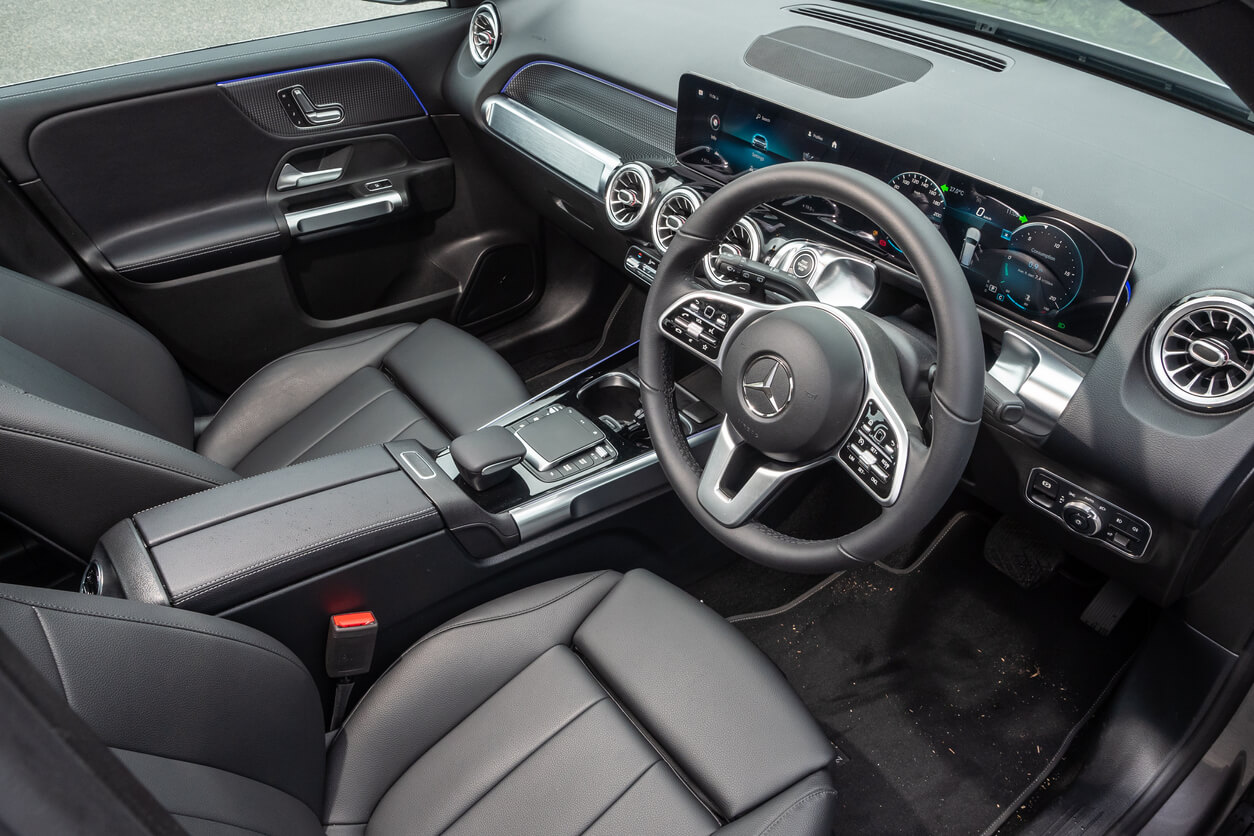
Interior of a Mercedes-Benz with a modern dashboard and steering wheel.
By Nicole Halavi

As of this month, Mercedes-Benz is recalling more than 24,500 vehicles because of an issue concerning the retraction of the front seat belts when not in use. According to the National Highway Traffic Safety Administration (NHTSA), the seat belts function properly, but “if the seat belt does not fully retract, the occupant may find the operation of the seat belt inconvenient and not wear it, increasing the risk of injury in the event of a crash.”

The retraction issue is caused by the distance between the seat belt retractor and the damping foam within the B-pillar paneling that might not be up to par with current product specifications and certain federal safety standards.

In February 2020, the automaker launched initial investigations based on reports from customers in the field describing instances where the front belts failed to properly retract to the stowed position.

Accordingly, the Mercedes recall will begin March 23, 2021, and dealerships will begin inspecting the retraction of the seat belts and adjust the damping foam within the B-pillars.

What Can I Do if I’m Driving a Mercedes Exhibiting Seat Belt Retraction Issues?

If you are driving a Mercedes that is exhibiting any of the issues discussed above concerning the front seat belts, California’s lemon laws are here to protect you and prevent any further complications. The attorneys at CCA are very knowledgeable about the issues associated with faulty seat belt retraction system and will work with you to fight back against the automaker.

Please do not hesitate to call CCA today for a free consultation: (833) LEMON-FIRM. We’ll get you the compensation you deserve – and at no cost to you!

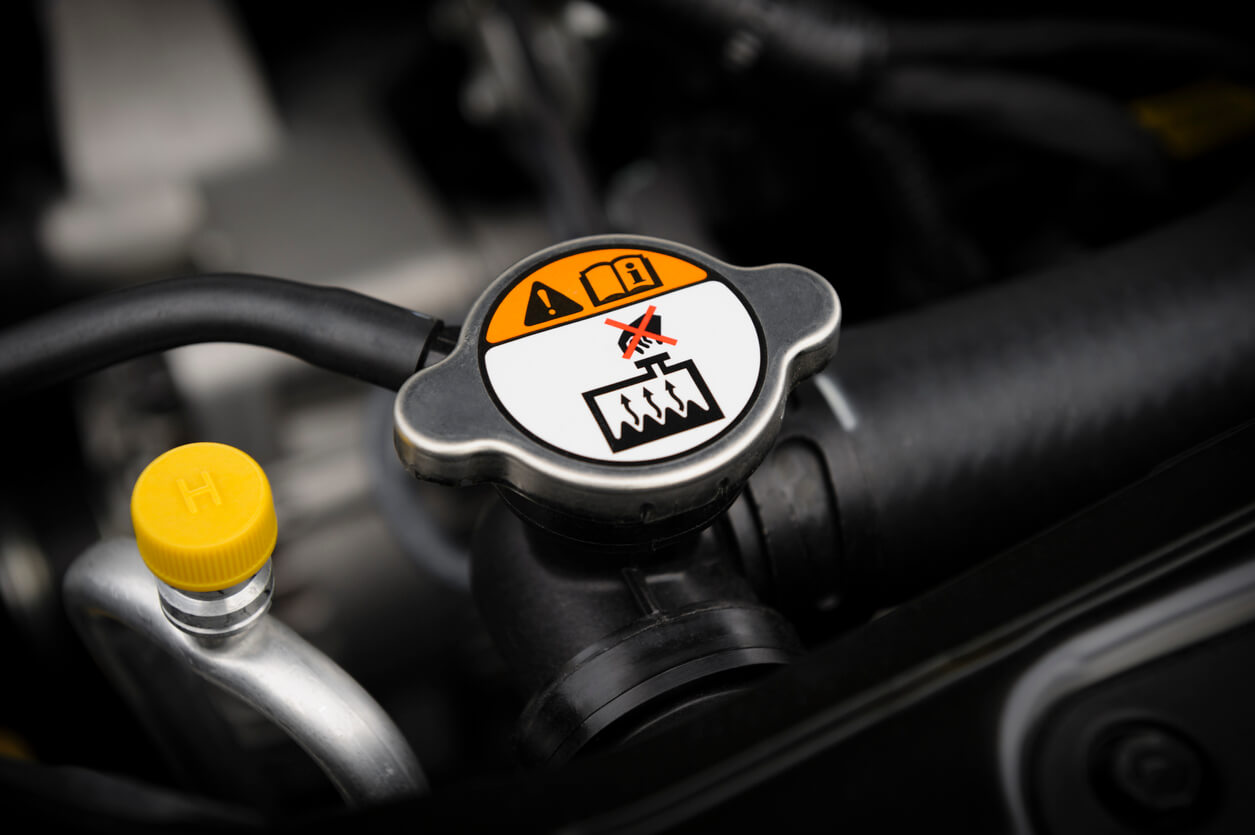
A close-up of a car's engine shows a radiator cap with a warning label on it, advising not to open it while hot.
By Nicole Halavi

A class action lawsuit was recently filed against automaker Mercedes-Benz regarding issues with the radiator guards. Such guards are required to protect against damage from rocks and debris that may damage the vehicle’s radiators and cause coolant leaks. The suit alleges that the front bumper covers, and air inlets were equipped with protective grilles prior to the 2016 models.

The problem looks like this: rocks strike the radiator, which causes a coolant leak, leading to an insufficient coolant system pressure, a warped head and ultimately, engine failure. The class action alleges the following models were equipped with wire mesh guards or injection-molded ABS plastic to protect radiators from rocks and debris:

  • 2016-present Mercedes-Benz AMG GT
  • 2016-present Mercedes-Benz AMG C43
  • 2016-present Mercedes-Benz AMG C63
  • 2016-present Mercedes-Benz AMG CLS63
  • 2016-present Mercedes-Benz AMG E43
  • 2016-present Mercedes-Benz AMG E63
  • 2016-present Mercedes-Benz AMG S63
  • 2016-present Mercedes-Benz AMG S65
  • 2016-present Mercedes-Benz AMG SL63
  • 2016-present Mercedes-Benz AMG SL65
  • 2016-present Mercedes-Benz AMG SLC43
  • 2016-present Mercedes-Benz AMG SLC63
  • 2016-present Mercedes-Benz AMG G63
  • 2016-present Mercedes-Benz AMG G65
  • 2016-present Mercedes-Benz AMG GLC43
  • 2016-present Mercedes-Benz AMG GLC63
  • 2016-present Mercedes-Benz AMG GLE43
  • 2016-present Mercedes-Benz AMG GLE63
  • 2016-present Mercedes-Benz AMG GLS63

One plaintiff claims that within one year of purchasing his new 2016 Mercedes AMG C63S, he noticed fluid leaking and a warning appearing concerning low coolant. At this point, he took his vehicle to a dealer in March 2017 to complain about the leak and warning. The technician performed a coolant pressure test and found that there was a hole in the intercooler. Ultimately, the dealer refused to cover the repair even though the vehicle was less than a year old with only 9,000 miles on it. The same plaintiff took his vehicle to another Mercedes dealer, which agreed to cover the labor costs for replacing the turbo radiator, but still charged him $1,050 for the actual repair. Unfortunately, the plaintiff alleges his radiator is still not protected from rocks and debris because there are no guards or covers over the radiator.

Finally, in May 2019, the automaker announced a service campaign for 2018-2019 E-Class and GLC-Class vehicles to install grilles to protect the radiators. Nevertheless, the class action suit alleges that owners will be forced to pay above $80,000 to replace engines that fail due to overheating from coolant leaks – not including the replacement of damaged radiators and associated parts.

What Can I Do if I have a Faulty Radiator?

If you are driving a Mercedes-Benz that is exhibiting any of the issues discussed above concerning the radiator, California’s lemon laws are here to protect you and prevent any further complications. The attorneys at CCA are very knowledgeable about the issues associated with these radiators in Mercedes vehicles and will work with you to fight back against the automaker.

Please do not hesitate to call CCA today for a free consultation: (833) LEMON-FIRM. We’ll get you the compensation you deserve – and at no cost to you!

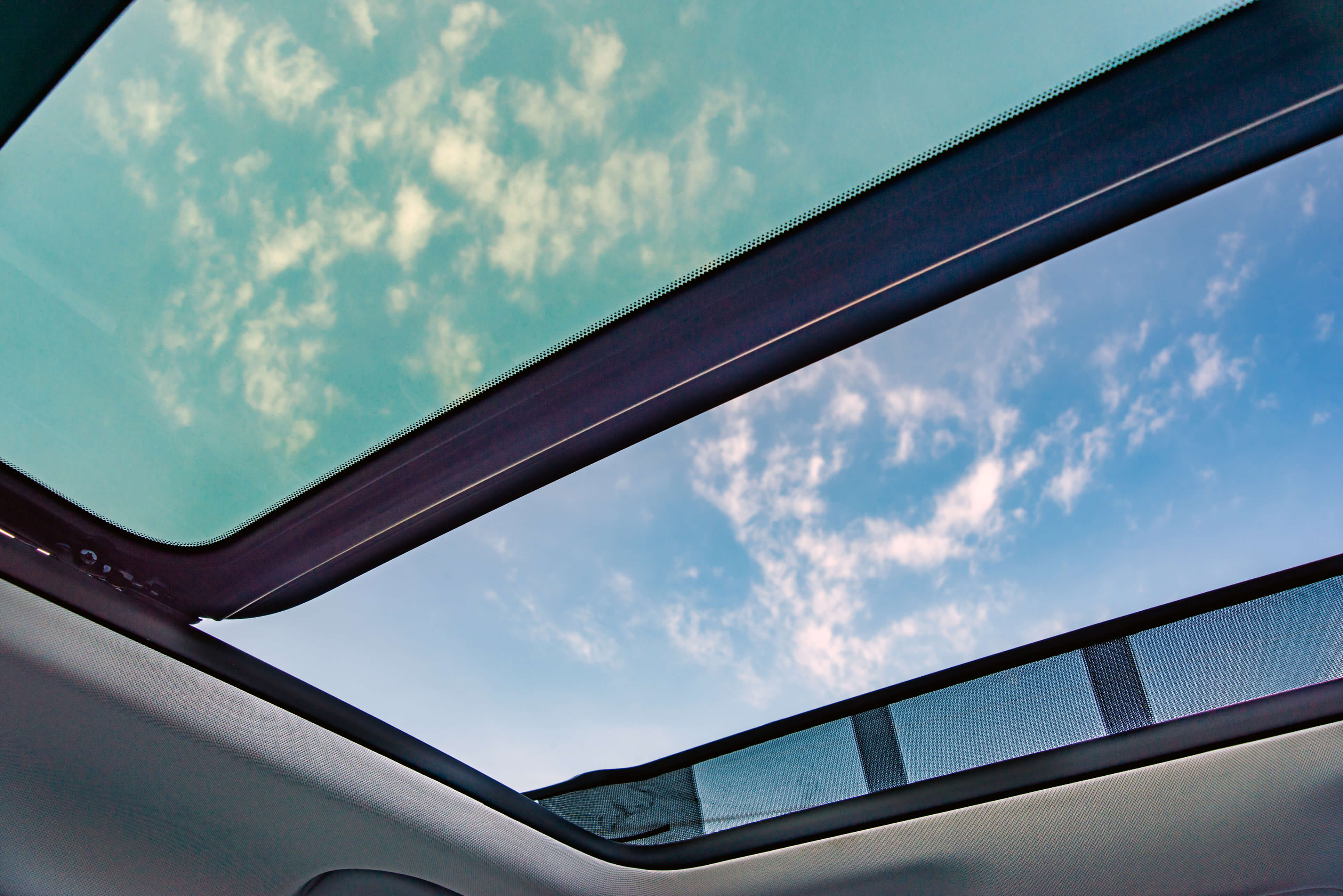
A sunroof in a passenger car.

Mercedes-Benz recently announced the recall of about 750,000 vehicles because the glass from the sunroofs could suddenly detach while a car is moving and create a road hazard. If you own or lease a Mercedes-Benz or other vehicle that has a defective sunroof, you should consult an experienced lemon law attorney. 

The Backdrop

The recall of nearly three-quarters of a million Mercedes vehicles involve model-year 2001 through 2011 C-Class, CLK-Class, CLS-Class and E-Class sedans, wagons, and coupes. Although Mercedes claims it is unaware of any damage or injuries caused by the defective sunroofs, a sunroof that detaches while a car is in motion is a hazard for vehicles that are traveling behind. 

The automaker attributed the problem to faulty bonding that attaches the sunroof glass to the roof of the vehicle. If the bonding fails, the glass could detach from the vehicle. Mercedes-Benz has instructed dealers to inspect and replace the sliding sunroof free of charge. Mercedes will begin notifying affected consumers on February 14, 2019.

Mercedes-Benz’s History of Sunroof Problems

This is not the first time Mercedes-Benz drivers have dealt with defective sunroofs. In 2018, Mercedes, and its parent company, Daimler AG, were hit with a class-action lawsuit in California over claims that panoramic sunroofs in certain Mercedes-Benz models spontaneously explode, shatter or crack. The lead plaintiff in the case claimed the sunroof in his 2015 GLA model suddenly shattered while he was driving, spraying the cabin with shards of glass. 

In February 2019, the case was partially dismissed. The presiding judge dismissed claims that  Mercedes was aware of the defect and had engaged in active concealment. However, the judge let the express warranty claim stand, finding that the plaintiff had plausibly alleged defects in material or workmanship. The judge also held that the plaintiff’s implied warranty claim was not time-barred because the sunroof defect existed within one year of when the vehicle was leased. At this juncture, the class-action is still working its way through the courts, so the resolution of this matter remains uncertain. 

Why This Matters

Given the sheer number of vehicles involved in the recall and the pending class-action lawsuit, it appears that Mercedes sunroof problem may not be an isolated incident. Moreover, a defective sunroof — one that leaks, fails to open or close, or that spontaneously shatters – can impact the value and safety of a vehicle. If you own or lease a new Mercedes-Benz that has a defective sunroof that the dealer cannot or refuses to repair, the best way to enforce your rights is to contact California Consumer Attorneys, PC.   Feel free to call us today for a free consultation with a lemon law professional: (833) LEMON-FIRM. 

A Mercedes-Benz after a vehicle fire.

By Sepehr Daghighian, Esq.

A vehicle fire can be one of the most dangerous (and stressful) occurrences in a person’s life. Not only can it lead to potentially fatal injuries, but such a traumatic experience can have lasting psychological and emotional consequences on a driver. At a minimum, your vehicle will likely be destroyed.  At CCA, we assist California consumers with lemon law recovery when they have suffered a vehicle file that was caused by a manufacturer’s defect and/or negligent repair.  

Vehicle fires can be caused for a number of reasons, from simple fluid leaks to difficult-to-diagnose electrical problems. While consumers, rightfully, do not expect their vehicles to become engulfed in flames, these types of fires do happen from time to time, even in luxury vehicles.

In 2017, German automaker Daimler AG announced a major worldwide auto recall (Campaign #17V114000) on approximately one million Mercedes-Benz vehicles at risk of catching fire. Over 300,000 of these vehicles were sold in the United States alone. Vehicles affected by the recall include certain Mercedes-Benz vehicles from model years 2015 to 2017, including C-class sedans, E-Class sedans, CLA sedans, and GLA/GLC crossover SUVs, among others.

In a statement made by Mercedes-Benz, the recall was apparently issued over a defective fuse that can lead to overheating and fires. Specifically, a faulty current limiter in vehicles’ starter motors can cause the push-button start feature to become overloaded and fail. Following multiple failed attempts to start a vehicle, the current limiter can overheat, melt, and start fires.

A safety recall report released by the National Highway Traffic Administration (NHTSA) further stated the risk is most concerning in vehicles that have experienced damage to the engine or transmission serious enough to block the starter motor. Drivers who experience a failed start should be careful about repeated attempts to start the engine, as it can lead to overheating and, in the most serious cases, potentially cause a vehicle fire.

If you own one of the affected models and it suffered from a vehicle fire, you may still be eligible to be compensated by Mercedes-Benz under California’s Lemon Law. Contact a CCA attorney today at (833) LEMON-FIRM for a free consultation.