
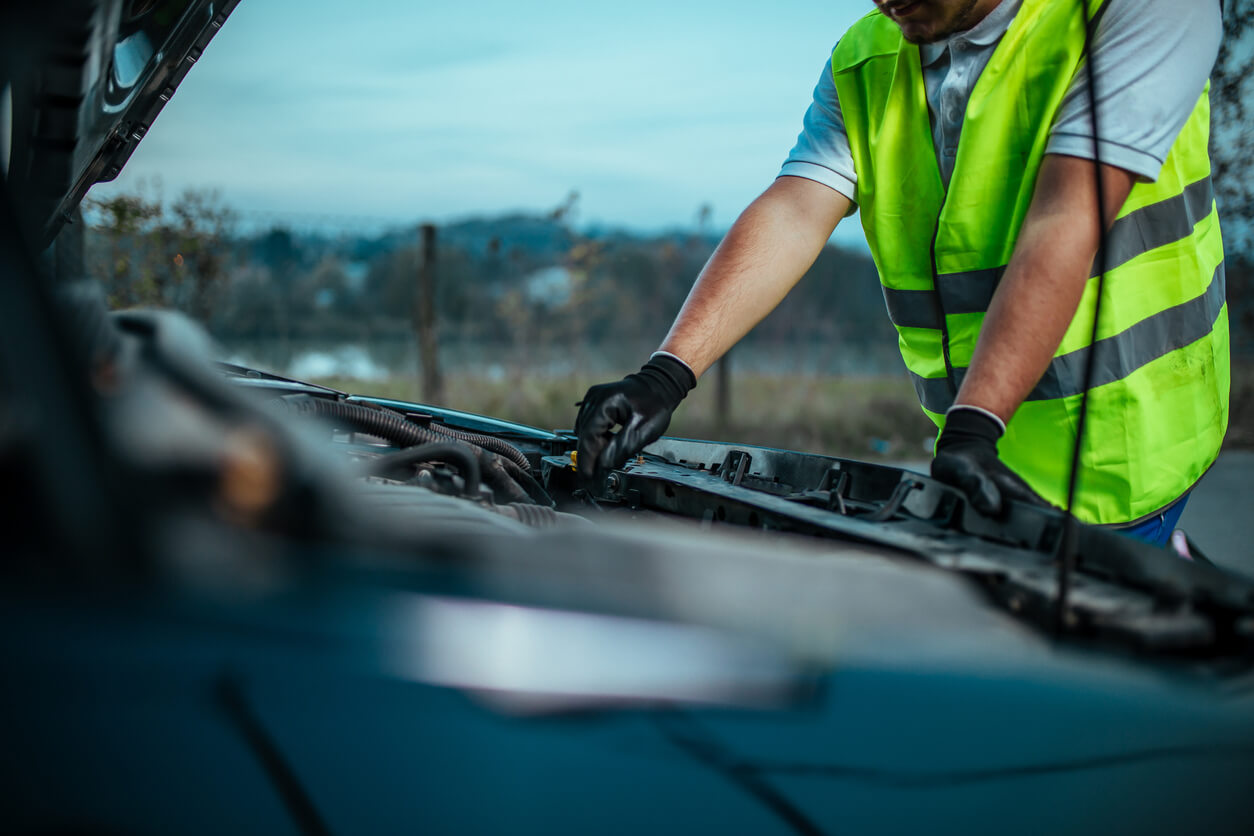
California Consumer Attorneys, PC discusses who can help your car pass the California lemon law test.

As frustrating as it is to have an ongoing problem with your new or newly purchased or leased automobile, it is doubly frustrating to find that—in spite of all your inconvenience and displeasure—you’ve been told your car doesn’t qualify as a “lemon.” Just when you thought that the law was finally on your side in a consumer dispute, you have been told that all your time and bother doesn’t count and you will have to fend for yourself. When you’re feeling down and out, before you begin sulking about the way large companies always have the advantage and individuals are always the underdog—call a talented lemon law attorney

Remember To Take It From Whom It Comes

In order to get professional advice, you have to go to a professional. The fact that your best friend, your father-in-law, your old mechanic, or even your car dealer or manufacturer has told you that you don’t have grounds to pursue a lemon law case, don’t take their word for it. 

Instead, consult with someone who earns a living by winning lemon law cases in California. If you think about it, it’s easy to see why your loved ones, who are not likely to be extremely well-informed in the field of lemon law might be mistaken. And the car dealer and manufacturer have every reason to convince you to back away from a lemon law claim or a lawsuit. They’re looking out for their bottom line.

The Truth of the Matter

Once you consult with a lemon law attorney, you will uncover the facts that lead to, or away from, a diagnosis of a “lemon.” More than that, you will come to understand that a high-quality lawyer in the field knows precisely which tactics will work to persuade the manufacturer to negotiate rather than fight a battle before a jury that is likely to be inclined to side with you, the consumer. 

Real Reasons Your Car May Not Be Considered a Lemon

There are times, of course, when your vehicle, though it’s given you a great deal of trouble, will not be legally categorized as a lemon. These disqualifying criteria are: 

  1. The defect is considered insubstantial, not tied to the vehicle’s use, value, or safety (e.g. the radio knob periodically comes off; the glove box has to be banged shut)
  2. The defect occurred due to your own, or a passenger’s negligence (e.g. your car stalled because you neglected to have the oil checked and it was very low)
  3. The defect is the result of an accident, theft, or vandalism (e.g. your car is pulling to the right after you’ve had a fender bender)
  4. The defect is the result of an unauthorized repair of the vehicle 

Why a Lemon Law Attorney Gives You an Edge

Some of the criteria for determining whether your car is a lemon are open to interpretation. Suppose, for example, that well before your car stalled in traffic, creating a dangerous situation, you had complained of a leak onto your garage floor, but the dealer’s service team checked the car twice and said it was fine. Or suppose that weeks before your minor accident you had your car checked because you felt it was pulling to the right and, though the dealership mechanics assured you that the steering was fine, that defect was responsible for your fender bender? 

A competent lemon law attorney will fight aggressively to support your version of events. Your lemon lawyer will collect and examine records from the dealer verifying your claims and argue your case before an arbitrator or, if necessary, in a court of law. Take advantage of the experience, technical knowledge, access to experts, well-practiced strategies and legal acumen of a lemon law attorney. You won’t pay any attorneys’ fees until you win replacement or repurchase of your vehicle.

California Consumer Attorneys, P.C. discusses how these two cases relate to manufacturers' affirmative duty.

By Michael H. Rosenstein, Esq.

The rulings in Krotin v. Porsche Cars North America, Inc. (1995) 38 Cal.App.4th 294, 45 Cal.Rptr.2d 10 (“Krotin”) and Lukather v. General Motors, LLC, (2010) 181 Cal. App. 4th 1041, 1051, 104 Cal.Rptr.3d 853 (“Lukather”) are twin pillars of consumer protection under California’s Song-Beverly Act.  While the decisions concern two very different vehicles – the former a 1987 Porsche 944 and the latter a 2005 Cadillac – they both reach the same important conclusion: that the Song-Beverly Act places the “affirmative duty” to repurchase defective vehicles squarely on the manufacturers’ shoulders.  

Mikhail and Maya Krotin leased their 1987 Porsche 944 in October of 1987 and, right at the outset, began experiencing problems driving the car in the mornings after a cold start. (Krotin at 298). During the first four months of ownership, the Krotins brought their Porsche into the shop four times for repair of the problem. (Id.) The Krotins proceeded to take the vehicle to 3 different Porsche dealerships for repair of the cold-start problem and a wide array of other issues; to no avail. (Id.) Meanwhile, they called Porsche Cars North America in May of 1988 to request a “buyback” of their beleaguered 944. (Id.) Porsche refused. In January of 1991, the Krotins wrote Porsche headquarters, indicating their vehicle was a lemon and requesting a repurchase. (Id. at 299). Porsche refused, again.  A month later, the Krotins wrote Porsche Financial Services advising that they were revoking acceptance of the vehicle and advising that they would no longer make payments on the now parked 944. (Id.) Eventually, Porsche repossessed the car and, then, added insult to injury by suing the Krotins.

Paul Lukather’s purchase of a 2005 Cadillac from Cadillac of Whitter in April of 2005 followed a similarly disastrous fact pattern.  Right out of the gate, Mr. Lukather’s Cadillac exhibited an intermittent but recurring malfunction in the electronic stability control system. (Lukather at 1043). Mr. Lukather brought the vehicle to the dealership numerous times for the ESC system issue, braking issues, and other issues.  While GM admitted at trial that the vehicle qualified as a lemon, it contended that Mr. Lukather did not do enough to trigger its obligation to repurchase or replace the vehicle.  

The Courts in both Krotin and Lukather reached the same important conclusion: under California’s Song-Beverly Act, the consumer does not need to take any steps other than to provide the manufacturer with the opportunity to repair the vehicle. (Krotin at 303; Lukather 1050).  Rather, the Song-Beverly Act imposes on manufacturers, “an affirmative duty to replace a vehicle or make restitution to the buyer if the manufacturer is unable to repair the new vehicle after a reasonable number of repair attempts, and the buyer need not reject or revoke acceptance of the vehicle at any time. The buyer need only provide the manufacturer with a reasonable opportunity to fix the vehicle.” (Lukather at 1050, citing Krotin at 303). Although not expressly stated, this essential conclusion is embodied in the CACI jury instruction for Failure to Repair After a Reasonable Number of Repair Attempts (CACI 3201), which imposes no obligation on consumers other than to take in their vehicles for service. (See: CACI 3201).  

In Krotin, the automobile manufacturers as amici curiae argued, not so fast! How could we possibly know if our vehicles are lemons after sell them?  We’re not “clairvoyant!”  The court of appeal decisively smacked this argument down, stating: “An automobile manufacturer need not read minds to determine which vehicles are defective; it need only read its dealers’ service records… Computerized recordkeeping at dealership service departments could easily facilitate this task, even without any direct contact from the consumer to the manufacturer or any request for replacement or reimbursement to the dealership. It is thus apparent that a manufacturer need not be ‘clairvoyant’; it need only demonstrate more initiative in honoring warranties.”  (Krotin at 303).  

In conclusion, Krotin and Lukather both require that manufacturers repurchase defective and unfixable vehicles – even without the consumer asking.  Although 15-years apart, both courts interpreted the Song-Beverly Act the same way: to require that the vehicle manufacturers monitor their computerized warranty records and voluntarily repurchase lemons.  

Theoretically, this legal obligation should put lemon law lawyers like us out of business, right?  Wrong!  In reality, in this writer’s experience, in spite of Krotin and Lukather, no manufacturer actually follows the law by monitoring its computerized warranty records to voluntarily repurchase defective vehicles.  While these important decisions provide substantial ammunition to California consumers, in reality, manufacturers simply pretend like they don’t exist.  

If you have a vehicle that you believe is a lemon, don’t hold your breath waiting for the manufacturer to do the right thing, call the experts at CCA today for expert assistance: (833) LEMON-FIRM. 

Disclaimer

This blog/website is made available by CCA for educational purposes. It provides general information and a general understanding of the law but does not provide specific legal advice. By using this site, commenting on posts, or sending inquiries through the site or contact email, you confirm that there is no attorney-client relationship between you and CCA. The blog/website should not be used as a substitute for competent legal advice from a licensed attorney in your jurisdiction.  Also, this blog/website is informational in nature and is not a substitute for legal research. Due to the dynamic nature of legal doctrines, what might be accurate one day may be inaccurate the next. As such, this blog/website should not be relied upon without specifically consulting with a legal professional about its contents.