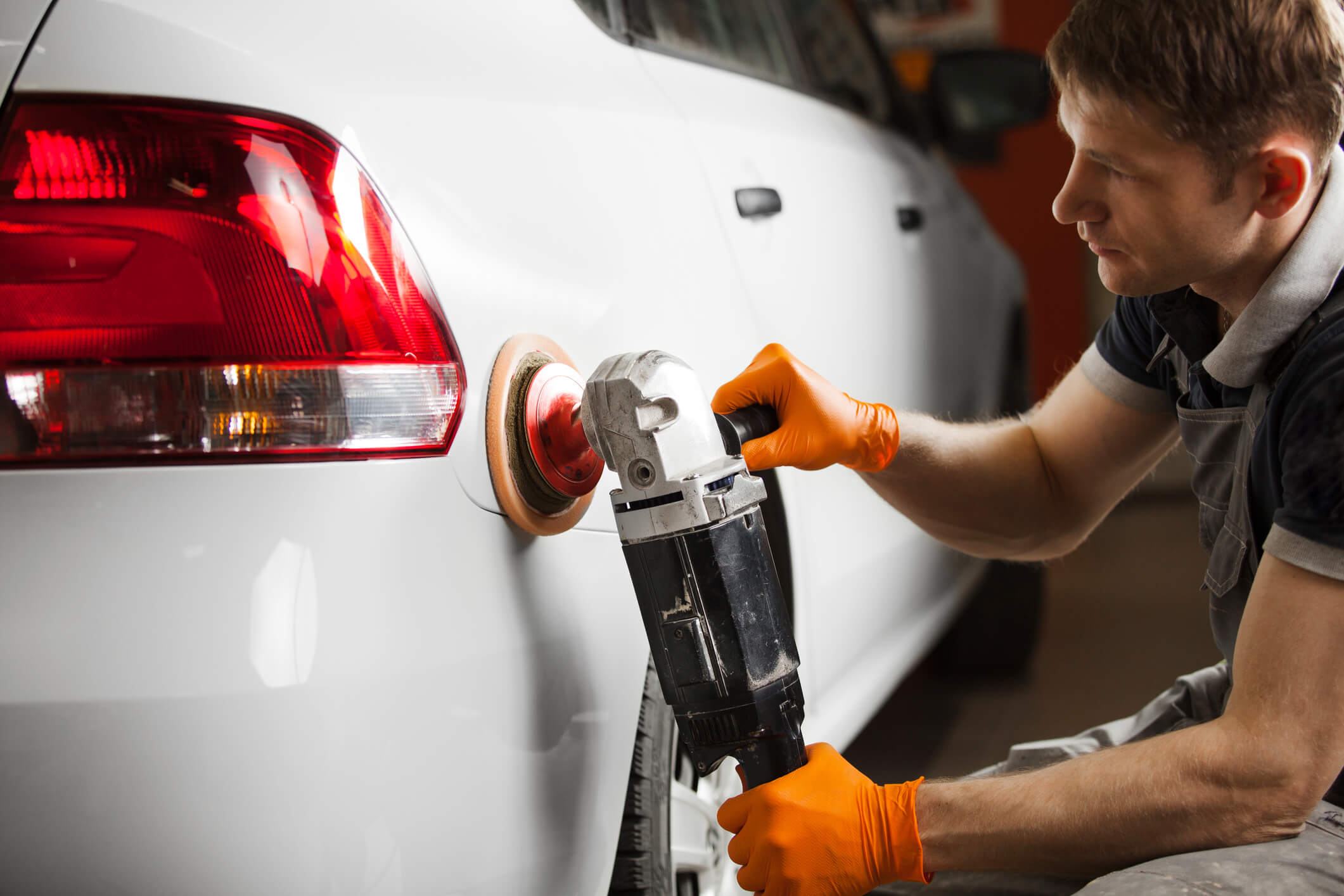
Man buffing out the paint defects of a white vehicle.

You drive off the lot with your new car, proud of its flawless finish. But weeks or months later, you notice the paint beginning to chip, bubble, or peel. What looked perfect under the dealership lights is now showing signs of premature failure. If this sounds familiar, you’re not alone, and you may have rights under California’s Lemon Law. Paint problems may seem cosmetic, but they can quickly turn into structural and financial headaches when left unresolved.

Common Vehicle Paint Defects

Automakers have long advertised durable, factory-applied paint designed to last for years. But more and more owners report issues within the first few years of ownership. These include:

  • Chipping or peeling along door edges, hoods, and roofs
  • Bubbling and blistering caused by poor adhesion or thin coatings
  • Premature fading from defective clear coat or pigment
  • Rust formation where protective paint layers fail

Even when covered by a new vehicle warranty, manufacturers and dealers don’t always resolve these problems after repeated attempts.

Recent Defect Reports and Settlements 

Several high-profile recalls, lawsuits, and technical service bulletins (TSBs) have highlighted ongoing issues:

  • Toyota Blizzard Pearl/Super White repaint program (through 2022): Toyota offered panel repainting and reimbursement to owners of affected vehicles, but only for expenses incurred before key cutoff dates
  • Ford Bronco paint bubbling reports: Owners have shared bubbling and corrosion experiences, in areas like rocker panels and doors, often during the first months of ownership. Many owners report warranty repairs.
  • Mazda Soul Red Crystal chipping complaints: Owners frequently point to fragile, thinly applied paint that chips easily, even days after delivery
  • Nissan Rogue/Infiniti peeling class action (pre-2022): A class-action settlement dealt with peeling paint issues. Owners continue to report similar problems on newer models.
  • Chrysler Pacifica & Town & Country bubbling/rust: Many owners report bubbling paint and rust, sometimes even after warranty repaints, and some vehicles required repeated repair or replacement of panels.

These updates show that paint problems aren’t limited to older models. They remain a problem on vehicles sold today.

Why Paint Defects Matter

Some drivers assume paint is a cosmetic issue. In reality, defects can:

  • Reduce your car’s resale value
  • Expose the body to rust and structural damage
  • Lead to ongoing repair costs that the manufacturer should bear

California’s Lemon Law applies when a defect substantially impairs a vehicle’s use, value, or safety, and recurring paint defects can meet this standard.

What to Do if Your Car Has Paint Problems

If you’ve spotted paint failure, it’s important to act quickly. Here’s a simple checklist to follow:

  1. Photograph the defects from multiple angles and in good lighting.
  2. Keep all records of dealer visits, repair attempts, and paint inspections.
  3. Review your warranty to confirm coverage for paint or corrosion.
  4. Request repairs through your dealer or manufacturer service center.
  5. Follow up in writing if repairs fail and keep copies of all communications.
  6. Send a formal demand letter if the issue continues after multiple attempts.
  7. Consult a Lemon Law attorney to evaluate whether your claim qualifies.

The more documentation you have, the stronger your case will be.

How The Lemon Firm Can Help

We will guide you through every step of the process. From reviewing your repair history to handling all communication with the manufacturer, our goal is to resolve your case as efficiently as possible. That resolution may include a refund, a replacement vehicle, or cash compensation. And you won’t pay us unless we win your case.

Don’t Let Paint Defects Lower Your Car’s Value

Paint defects are more than an eyesore; they can be a sign that your vehicle is worth far less than what you paid. If repeated repair attempts have failed or your warranty isn’t providing relief, California’s Lemon Law may entitle you to compensation.

Contact The Lemon Firm today for a free consultation. We have the experience and resources to stand up to automakers and get you the resolution you deserve.

FAQs About Paint Problems and the Lemon Law

Does California’s Lemon Law cover paint defects?

Yes. If the paint problem affects your car’s value or safety, and the dealer cannot fix it after a reasonable number of attempts, it may qualify under California’s Lemon Law.

Are paint problems considered a warranty issue?

Yes. Most new car warranties cover paint and corrosion for several years. If your dealer refuses to honor that, you may have a claim.

Can I file a Lemon Law claim if repainting was offered?

It depends. If repainting doesn’t solve the problem or the defect returns, you may still qualify for Lemon Law relief.

What should I do if the paint on my car keeps peeling?

Document the defects with photos, keep all service records, and request repairs through your dealer. If the issue continues, consult a Lemon Law attorney to explore a claim for compensation, refund, or replacement.

An exotic vehicle driving on the highway.

By Lauren C. Martin, Esq.

Folks paying the price of a small house for a vehicle typically expect to receive a solid and reliable vehicle.  However, in spite of their extravagant prices and respected marques, owners of high-end luxury and exotic vehicles all too often find their vehicles from the same frustrating defects and owners of much less prestigious vehicles.  Fortunately, the seasoned attorneys at CCA are experienced in handling lemon law claims relating to luxury, exotic, and high-end vehicles at no costs to their owners.  

Some of the most respected and expensive vehicle brands have produced their share of lemons.  For example:

ROLLS-ROYCE:

The vaunted British vehicle brand Rolls-Royce is, in fact, owned by BMW AG, the same brand that builds BMW and Mini vehicles.  Unfortunately for Rolls-Royce owners, their vehicles can suffer from many of the same issues as their cheaper cousins. For instance, in May 2019, BMW announced a recall for the seat belts, which affected BMW X1’s, Mini Coopers, and Rolls Royce Ghosts.   Also, in October 2019, BMW announced a recall of its vehicles due to defects in the backup camera. This recall, likewise, crossed vehicle lines and included Rolls Royce Phantoms and Cullinans, as well as many BMW models.

The 2010-2011 Rolls-Royce Ghost was also the subject of two recalls for their auxiliary water pump – both in 2012 and in 2018. According to documents filed with the National Highway Transportation Safety Administration (“NHTSA”), “if the circuit board were to overheat, it can increase the risk of a fire.”  The problem lies in a faulty circuit board, which could cause the circuit board to overheat, and potentially start an engine fire. This recall was submitted in addition to BMW, Rolls-Royce’s manufacturer, recalling certain 2011-2012 BMW 5 series, 6 series, 7 series, X5 series, X6 series and MINI Cooper series, for the same problem. If the concern of a vehicle fire isn’t enough – there are also limited parts available to remedy this concern. In fact, not all parts were available even at the time the recall was issued. Yet, pursuant to BMW’s recall with NHTSA, “BMW recommends that owners park their vehicle outdoors until the recall remedy has been performed.”

PORSCHE:

The Stuttgart-based German automaker Porsche has made immense improvements in the reliability of its vehicles over the past several decades.  While Porsche sports cars of the ’80s and ’90s were known finicky reliability, today Porsche builds much more reliable cars. Nonetheless, as Porsche has widely expanded its vehicle lines, today Porsche owners encounter a wide range of serious and troublesome issues with their vehicles.  

Owners of Porsche’s new vehicle lines, the Cayman, Cayenne, Panamera, and Boxster have encountered a variety of troubling and serious issues with their vehicles.  Porsche owners’ vehicle problems are particularly worrying when the vehicles fall outside of the manufacturer’s warranty and the cost of repair is stratospheric.  

For example, owners of Porsche’s SUV, the Cayenne, have complained of nagging engine, electrical, drivetrain, and other issues.  Porsche Cayenne owners with engine problems have found their vehicles stall on them while being driven, hesitate during acceleration, leak fluids, and exhibit unusual vibrations.  When these issues are not fixed under warranty, customers can face massive repair bills.  

Porsche has also been forced by the government to issue recalls in order to bring its vehicles into conformance with safety standards.  In July of 2019, Porsche announced that it was recalling 99,665 Panamera sedans and Cayenne SUVs because of a cable that links the gear selector to the transmission could fail, allowing the transmission to be in a different gear than what the shifter indicates, according to the National Highway Traffic Safety Administration.  This danger, according to NHTSA, raises the chances the vehicle could roll away. 

MERCEDES-BENZ AMG:

Mercedes-Benz’s prestigious AMG line of vehicles has also been the subject of numerous defects, recalls, and complaints.  CCA’s attorneys have handled a wide range of cases involved AMG vehicles including engine problems, transmission problems, electrical issues, and even vehicle fires.  For instance, Mercedes-Best G550 owners have suffered through a frustrating series of transmission issues, resulting in harsh shifts and strange noises emanating from the vehicle’s transmission.  

Mercedes-Benz has also been forced to issues numerous recalls, in order to address issues with its AMG vehicles.  For instance, in August of 2017, Mercedes-Benz announced a recall of its 2016-2017 AMG GLE43 Coupe and 2017 AMG GLE43 vehicles because of a defect wherein their engines would shut down while driving.  Mercedes recalled these vehicles in 2016 to update the engine control unit software because of unintended engine shutdowns. However, customers who had the updates kept complaining about their engines shutting down, so the automaker opened an investigation. 

In January of 2018, the automaker announced a recall of its AMG GT, AMG GT R, AMG GT C and AMG GT S cars to fix problems with the seat belts.  In July 2019, more recalls were issued for the AMG GT s vehicles, because of issues with the vehicle’s driveshafts.  

LAMBORGHINI:

Lamborghini builds some of the quickest and most exciting vehicles in the world. However, the Italian automakers beautiful sports cars are not without their issues. For instance, in 2019, Lamborghini announced the recall of certain 2017-19 Aventador S Coupè and Aventador S Roadster vehicles. Lamborghini’s announced that the defect involved the engine management software used for both vehicles, which, due to a defect, may cause the engine to stall while coasting toward a stop. 

Numerous models of the Lamborghini Aventador were the subject of multiple recalls, those which could increase the risk of fire or the risk of a crash. For instance, in 2017, Automobili Lamborghini recalled certain 2012-2017 Aventador Coupe and Roadsters due to a fire risk related to the evaporative emissions control system. The 2012-2017 Aventador Coupe and Roadster vehicles, under certain conditions while driving with a full tank of gasoline, the gasoline could contact the exhaust system and cause a fire. 

FERRARI:

Ferrari, the iconic sports car brand from Maranello, Italy, like all other automakers has also suffered through a series of recalls and defects.  For instance, in February of 2019, Ferrari announced two safety recalls for its vehicles. The first recall (number 67) affects certain 2017-2019 GTC4Lusso and 2018-2019 GTC4Lusso T vehicles. According to the NHTSA document, Ferrari is recalling these cars due to defective doors. The “tension on the door lock mechanism may result in the vehicle’s door being unable to be opened by using the external door handle.”  The second recall (number 69) affects a wider range of Ferrari vehicles. According to NHTSA, the fuel vapor separator of certain 2017 LaFerrari Aperta, 2018-2019 488 GTB, GTC4Lusso T, GTC4Lusso, 488 Spider, 812 Superfast, and 2019 488 Pista vehicles could potentially crack which could lead to a fuel leak that may increase the risk of fire in these vehicles.

Also, it was reported in December of 2018 that a jury in Arkansas awarded a $5.8-million judgment against a dealership for fraud, in connection with the purchase of a $90,000 Ferrari F430, which was purchased in 2016.  According to court documents, shortly after purchase, the plaintiff began smelling gas and later discovered undisclosed issues, such as a leaky fuel pump, suspension problems, and a cracked exhaust manifold. The jury found that the dealership had committed fraud because it had advance notice of the issues prior to selling the vehicle and failed to disclose them.  Although the Arkansas case involved a dealership and not the manufacturer, the jury’s verdict demonstrates that exotic and luxury vehicles can be the subject of lemon law litigation, too.  

MCLAREN:

McLaren is known for building some of the best performing and best-looking vehicles on the road. The gorgeous vehicles from Surrey, England combine blistering performance with eye-popping looks. However, in spite of their six-figure price tag, McLaren vehicles have not been without their issues. In fact, McLaren owners have complained extensively about reliability issues plaguing their vehicles. Also, the elite brand’s vehicles have suffered a series of vehicle fires, which result in the destruction of the vehicle as a whole.  

BENTLEY:

Bentley motorcars are synonymous with luxury and prestige. The aspirational car brand was founded by W.O. Bentley in 1919 and has since produced some of the world’s most desirable vehicles. Today, however, Bentley is a subsidiary of Volkswagen Group and has developed a reputation for building vehicles that suffer an abnormally high number of defects.  

In fact, according to an article in England’s Telegraph newspaper, Bentley came in dead last in terms of reliability among 37 separate automakers. Notably, according to The Telegraph, the repairs on Bentley vehicles were some of the most expensive of any carmaker.  

RESOLVING LEMON LAW CLAIMS:

If your high-end vehicle has since turned into a high-end headache, you need serious legal representation on your side. The lemon law attorneys at CCA are experts in handling lemon law complaints against manufacturers of high-end, luxury, and exotic vehicles. Our exceptional legal services are second to none and come at no cost to you – all of your legal bills will be paid by your vehicle’s manufacturer. If your vehicle has not lived up to your expectations, has been parked due to recalls, or has scared you out of driving it, we invite you to call CCA for a free consultation: (833) LEMON-FIRM.

CCA services consumers throughout the State of California and persons that purchased their vehicles in California, only

Mechanic acting as an expert witness in a lemon law case.

When a lemon law case involves complex mechanical, electrical, or software-related defects, technical witnesses often play a central role in proving what went wrong. Their inspections, diagnostics, and analysis help establish the cause of the defect, the impact on your vehicle, and whether the dealership’s repairs were adequate. At The Lemon Firm, we use qualified automotive witnesses whose findings strengthen your claim, counter manufacturer arguments, and provide the clear technical record needed to support a refund or replacement. We represent California consumers in these cases and can help you move forward if your vehicle continues to malfunction.

Why Choose The Lemon Firm

When you hire us, you gain a legal team that understands how to build a case supported by objective technical evidence. Our clients work with us because we offer:

  • A deep bench of automotive technicians who understand defect patterns and real-world failure modes
  • Strategic use of inspections, diagnostics, and vehicle testing to identify underlying problems
  • Skilled trial attorneys who know how to present technical findings clearly and effectively
  • Direct communication and ongoing guidance at every stage of your case
  • A proven record of outcomes shaped by credible technical testimony

How Technical Witnesses Influence Lemon Law Litigation

What Do Technical Witnesses Do in a Lemon Law Case?

Lemon law cases often involve defects that are hard to diagnose or replicate. Technical witnesses help uncover what is happening inside the vehicle by reviewing repair records, performing inspections, and evaluating whether dealership work met required standards. Their testimony explains how and why a defect affects the vehicle’s use, value, or safety, which is central to California’s lemon law.

Why Technical Testimony Matters When Manufacturers Dispute the Defect

Manufacturers frequently rely on in-house engineers or dealership personnel to argue that a defect does not exist. Independent technical witnesses counter those arguments with objective findings. Their analysis often becomes a deciding factor when:

  • A defect is intermittent
  • Repair attempts failed for reasons not revealed in dealership records
  • Manufacturers blame the consumer for the problem
  • A defect involves complicated software, electronics, or newer automotive technology
  • The severity of the defect is unclear without in-depth testing

When juries and judges hear testimony based on unbiased inspections, the technical record becomes much harder for a manufacturer to refute.

How Technical Witnesses Evaluate Vehicle Defects

In-Depth Inspections and Diagnostics

Technical witnesses conduct hands-on evaluations that go far beyond standard dealership tests. They may:

  • Perform extended test drives
  • Use diagnostic equipment to detect hidden faults
  • Assess the condition of internal components
  • Compare the vehicle’s behavior to expected manufacturer performance standards

This type of analysis can reveal problems that routine service appointments overlook.

Reviewing Repair Orders and Dealership Procedures

Many lemon law disputes involve questions about whether the dealership actually performed repairs as documented. Technical witnesses examine repair orders for accuracy, evaluate the quality of the work performed, and determine whether dealership personnel followed required procedures. This review can uncover patterns of incomplete repairs that help support your claim.

Assessing Fluid Samples and Other Scientific Tests

In cases involving engine wear, transmission malfunction, overheating, or internal damage, technical witnesses may analyze fluid samples. These tests give insight into metal shavings, contamination, or other indicators of mechanical failure. Scientific results often provide definitive proof that a defect exists even when manufacturers insist the vehicle is functioning normally.

Explaining Complex Automotive Systems to the Court

Modern vehicles rely on computer modules, advanced sensors, integrated wiring, and software-driven components. Technical witnesses break down these complex systems in plain language so jurors understand:

  • How the defect developed
  • Why repair attempts failed
  • Whether the vehicle is likely to continue malfunctioning
  • What the defect means for long-term safety and performance

Clear explanations help decision-makers see the full picture.

When Technical Testimony Determines Case Outcomes

We regularly see cases in which a technical witness’s findings tip the balance in favor of our client. Examples include:

  • Stalling or hesitation during acceleration
  • Transmission problems that appear only under certain driving conditions
  • Electrical failures connected to faulty modules
  • Steering or braking issues that dealerships cannot replicate
  • Persistent warning lights despite repeat repairs

In many cases, testimony from an independent witness helps prove that the defect exists and has not been corrected, which strengthens your right to a refund or replacement under California’s lemon law.

Your Next Step: Speak With Our Lemon Law Team

Technical evidence is often the strongest foundation of a successful lemon law case. If your vehicle has ongoing defects and you are ready to move forward, we can help you understand your options and determine whether technical testimony would benefit your claim. Contact The Lemon Firm to start your case evaluation and get clear guidance on the best way to move ahead.

FAQ: Expert Witnesses in Lemon Law Litigation

Do all lemon law cases require a technical witness?

Not always. Some defects are well-documented in manufacturer records or widely known. Technical testimony becomes more important when the defect is intermittent or when the manufacturer disputes your claim.

Will the technical witness inspect my vehicle in person?

In many cases, yes. Inspections allow the witness to verify conditions that may not appear in repair orders.

Who pays for the technical witness?

These costs may be recoverable as part of your lemon law case. We can explain how this works during your consultation.

Someone driving a car in the rain, experiencing water leaks.

When you buy a vehicle in California, you expect it to run reliably. But when repeated repair attempts don’t fix the problem, the case can move into lemon law litigation. At that point, it’s not just about the facts—it’s about proving them in a courtroom. That’s where expert witnesses come into play.

Why Expert Witnesses Matter in Lemon Law Cases

Lemon law disputes often involve technical and scientific questions. A vehicle may show intermittent electrical failures, rough transmission shifts, or sudden loss of power. These problems aren’t always easy for a jury to understand without help. An expert witness can:

  • Conduct detailed inspections of the vehicle
  • Review repair orders and dealership records
  • Perform scientific testing on fluids or components
  • Explain complex systems in plain English for the judge or jury

By translating technical issues into understandable testimony, an expert witness strengthens the evidence supporting your claim.

Legal Standards for Expert Witnesses

In California, the use of expert witnesses is governed by Evidence Code Section 720, which requires that the witness demonstrate sufficient knowledge, skill, training, or education on the subject at hand. On the federal side, Rule 702 of the Federal Rules of Evidence provides that expert testimony is admissible if it helps the trier of fact understand the evidence or determine an issue in dispute.

These standards ensure that the testimony presented in your case comes from a qualified professional who can explain not only what went wrong with your car but also why it matters.

How Automotive Experts Assist in Lemon Law Litigation

Automotive experts are particularly valuable because manufacturers often rely on their own engineers or in-house staff to defend against claims. To counterbalance that, independent experts can provide objective analysis. Their contributions may include:

  • Vehicle inspections: Looking beyond dealership notes to uncover underlying defects
  • Scientific testing: For example, fluid analysis that works like a “blood test” for engines or transmissions, showing internal malfunctions that aren’t visible on the surface
  • Technical evaluations: Reviewing repair history to assess whether dealerships followed proper procedures
  • Testimony: Explaining findings in a way that juries can trust and understand

This outside perspective often reveals flaws in the manufacturer’s repair approach or exposes recurring defects across a line of vehicles.

Examples of Expert Impact in Trials

California juries have relied heavily on expert testimony in lemon law verdicts. For example, experts have analyzed components like the Totally Integrated Power Module (TIPM) in certain vehicles, demonstrating patterns of failure despite manufacturer claims of normal operation. In other trials, experts have uncovered intermittent problems, such as hesitation during acceleration or sudden surges, that the defense insisted did not exist.

In one of our cases, a defense engineer denied any defect in a vehicle accused of unintended acceleration. After conducting over a thousand miles of testing, an independent expert presented clear evidence of a defect. The jury sided with the plaintiff, showing how persuasive well-presented technical testimony can be.

Leveling the Playing Field Against Manufacturers

Manufacturers often arrive in court with significant resources and their own teams of technical staff. Without an independent voice to challenge that narrative, consumers may face an uphill battle. By working with trusted experts, we ensure your case is built on solid technical ground and that jurors hear the full story, not just the manufacturer’s version.

How The Lemon Firm Can Help

At The Lemon Firm, we regularly work with some of the most knowledgeable automotive professionals in the field. These experts help us analyze repair histories, test defective components, and provide testimony that jurors can rely on. We pair their technical insights with our trial experience to give your case the strongest foundation possible.

If your vehicle continues to fail despite repeated repairs, we’re here to help. Contact The Lemon Firm today to schedule a free consultation and learn how our team and our network of trusted expert witnesses can support your lemon law claim.

Frequently Asked Questions

What is an expert witness in a lemon law case?

An expert witness is a qualified professional, often an automotive technician or engineer, who provides technical analysis and testimony to help explain vehicle defects in court.

Do I need an expert witness for my lemon law claim?

Not every case requires one, but in disputes involving complex defects or contested repair histories, expert testimony can make your claim much stronger.

How does an expert witness help in a trial?

They can inspect your vehicle, review repair orders, conduct tests, and explain technical findings in a way that judges and juries can understand.

Who pays for the expert witness in a lemon law case?

In many successful California lemon law claims, the manufacturer may be required to cover reasonable costs, including expert witness fees.

White Jeep SUV at the front of a line of cars near a modern building.

By Sepehr Daghighian

Owners of FCA’s 2011 to 2013 Jeep Grand Cherokees and Dodge Durango have suffered through years of frustrating vehicle defects, repair half-measures, recalls, visits to the dealership, and continued vehicle defects.  Most recently, on November 14, 2019, FCA (Jeep and Dodge’s parent company) announced yet another recall to address the Grand Cherokee and Durango’s notorious stalling problem.  

Owners of 2011 to 2013 Jeep Grand Cherokees and Dodge Durango began complaining as early as 2011 about an extremely dangerous tendency by their vehicles to spontaneously shut off or not start.  Vehicle owners complained, particular while making turns, that their Grand Cherokees and Durangos would suddenly turn off, resulting in a loss of power and difficulty controlling the vehicle. Also, Grand Cherokees and Durango owners found that their vehicles would intermittently not start.  Adding insult to injury, when taking their vehicles under warranty to their authorized Jeep/Dodge dealerships, all too often, vehicle owners were told that there was “no problem found” or that nothing was wrong with their SUVs.  

By May of 2013, FCA traced the root of the dangerous stalling condition to the vehicle’s TIPM or Totally Integrated Power Module.  The TIPM serves as the electronic distribution system in Grand Cherokees and Durangos, distributing power to all of the vehicle’s components, including the fuel pump.  FCA found that, when the TIPM failed to provide power to the fuel pump, the fuel pump wouldn’t supply fuel to the motor, and the vehicle would either stall or not start.  By May of 2013, FCA prescribed a fix for the beguiling TIPM problem in the form of Star Case No.: S1308000399.  While the Star Case prescribed externalizing the fuel pump’s relay to the TIPM, the Star Case’s remedy was not immediately deemed a mandatory recall.  Therefore, countless Grand Cherokee and Durango owners continued to suffer through frustrating and dangerous no-starts and vehicle stalls.  

On August 21, 2014, the Center for Auto Safety (“CAS”) sent an investigation demand to National Highway Traffic Safety Administration (“NHTSA”) wherein it lambasted FCA for its TIPM and the half-measures, which had been implemented to address the stalling concerns.  The CAS Petition described, “The TIPM consists of a computer, electric relays, and fuses, and is responsible for distributing power throughout the entire vehicle. Not only do Chrysler’s faulty TIPMs result in vehicle stalling, they have also been implicated in airbag non-deployment, random horn, headlight, taillight, door lock, instrument panel and windshield wiper activity, power windows going up and down on their own, failure of fuel pump shutoff resulting in unintended acceleration, and fires.”  Many of these same defects have been experienced by CCA’s attorney’s clients. The Petition went on to state, “Chrysler owners seeking relief of these conditions are currently being forced to pay for TIPM replacement, and wait weeks or months for the part to become available, due to incredible demand. In the interim, these owners remain at the mercy of a defect which many have likened to the vehicle being possessed and uncontrollable. A look at consumer complaints filed with CAS suggests a better name for the TIPM – Totally Inept Power Module.”  

Only after CAS had petitioned NHTSA did FCA issue its first recall for the TIPM defect.  In December 2014, FCA issued Recall P54, which essentially prescribed the same fix that FCA was aware of in May of 2013 in the above Star Case.  Therein, FCA admitted that: “The Totally Integrated Power Module (TIPM) on about 188,000 of the above vehicles contains an internal fuel pump relay that could operate intermittently or fail without warning. An intermittent or failed fuel pump relay could cause the engine to stall while driving and cause a crash without warning.”  However, the P54 recall only applied to owners of 2011 Jeep Grand Cherokees and Dodge Durangos. Incredibly, owners of 2012-2013 vehicles, which were equipped with the same TIPM and suffered from the same dangerous defect, did not receive a recall. What is worse, even after P54 was applied to their vehicles, many Grand Cherokee and Durango owners continued to suffer from vehicle stalls and no-starts.  

Inexplicably, FCA waited until July 2015 (a full year and a half later) to issue recall P54 for 2012-2013 Grand Cherokee and Durango owners.  This new recall was called “R09” and also prescribed the same fix as the Star Case from May of 2013.  No explanation was given as to why FCA waited over 2-years to implement this fix as a recall.  What is worse, vehicle owners continued to suffer through vehicle stalls and no-starts even after the recall was applied to their vehicles.  Frustratingly, the FCA dealerships continued to tell them that “nothing was wrong” or would charge them for expensive repairs.  

Only very recently did FCA acknowledge what its customers have known all along: that the half-measures prescribed by the Star Case, Recall P54, and Recall R09 were insufficient to adequately address the stalling concern.  On November 14, 2019, FCA issued Recall V62, wherein it acknowledged that “Some 2011 through 2013 MY Dodge Durango vehicles that are included in the NHTSA Recalls [P54] and [R09] vehicle population may have had a fuel pump relay installed as a recall remedy that is susceptible to silicon contamination of the relay

contacts that can cause the relay to fail.  The vehicle population was determined to be all vehicles that are included for NHTSA Recalls [P54] and [R09], including all remedied and unremedied vehicles… The total affected vehicles for this model is 147,846.”  Incredibly, while some of the Durangos and Grand Cherokees are now nearly a decade old, the initial recall does not yet issue a fix for the TIPM problems, stating, “The remedy is currently under development.”

CCA’s attorneys are some of the most experienced in California with regards to the history of vehicle stalling and no-starts afflicting FCA’s vehicles (Jeep, Dodge, Chrysler, Ram, Fiat, and others).  If you’ve suffered through excessive repairs or if your FCA vehicle hasn’t delivered the quality that you were promised, we invite you to call us today for a free consultation with a Lemon Law professional: (833) LEMON-FIRM.  

TheLemonFirm.com discusses a series of new vehicle warranties.

By Brian T. Murray

Aside from the new car smell, one of the best advantages of purchasing a new vehicle is knowing that your new car will be covered by the manufacturer’s warranty.  Yet, consumers don’t often appreciate that their vehicles are covered by multiple, sometimes overlapping warranties.  

For the majority of automobile manufacturers, the new-vehicle warranty includes a basic bumper-to-bumper warranty and a powertrain warranty.  The basic or bumper-to-bumper warranty usually covers the cost of repairs for defects in materials or workmanship to all components for a given time and mileage.  Currently, Volkswagen offers one of the industry’s best basic warranties that lasts for 6-years or 72,000-miles, whichever occurs first.

Most automobile manufacturers also offer a powertrain warranty that applies to major mechanical components like the engine, transmission and axles.  Several manufacturers including Kia, Hyundai, and Mitsubishi offer a 10-year or 100,000-mile powertrain warranty.  However, make sure to read the fine print because in some cases, the 10-year or 100,000-mile powertrain warranty is only available to the original owner of the vehicle.  Subsequent owners are stuck with much less coverage.  

In addition to the manufacturer’s warranty, vehicle emissions systems are covered by warranties that statute.  Among other parts, the Federal Emissions Warranty can cover emissions-related component repairs for vehicles up to 8 years old or up to 80,000 miles, whichever comes first. The Federal Emissions Warranty covers the repair/replacement of many emission-related components. 

Components typically covered under the 8/80 Federal Emission Warranty include emission parts that must perform for an extended period of time without performance issues. These components include a vehicle’s Catalytic Converter, Transmission Control Module, and Powertrain Control Module and/or Engine Control Unit (PCM or ECU).

The State of California has its own emissions component coverage for 7-years or 70,000-miles. The California Emissions Warranty covers many more smog parts than the Federal Emissions Warranty. There are also certain year, make and model vehicles that may have emission parts covered under the California Warranty that go above and beyond the normal parts coverage for 8/80.

Historically, new vehicle warranties were not always so comprehensive.  At the turn of the 20th century, some manufacturers including Oldsmobile offered no warranty at all.  By the 1920s, it was not uncommon to see a 90-day warranty sold with new vehicles.  

Despite the introduction of longer warranties in the 1960s, automobile quality had deteriorated so badly that the U.S. Federal Trade Commission launched an investigation into the growing litany of consumer complaints. In 1975, Congress enacted the Magnuson–Moss Warranty Act in response to merchants’ widespread misuse of express warranties and disclaimers. The purpose of the act was to make warranties on consumer products more readily understood and enforceable.  

The Magnuson–Moss Warranty Act is still in effect today to protect consumers from deceptive warranty practices in connection with all consumer goods, including automobiles.  Although manufacturers of consumer goods are not required to provide written warranties, if a written warranty is provided, it must comply with the Magnuson-Moss Act.

In addition to the Magnuson-Moss Warranty Act, California Consumers enjoy the benefit of the Song-Beverly Consumer Warranty Act.  The Song-Beverly Act is one of the strongest consumer protection acts in the nation and provides broad protections to vehicle owners when their vehicle manufacturers fail to live up to the promises made in their warranties.  

If your vehicle has had excessive warranty issues or spent too many days in the shop, please give the lemon law experts at CCA at call today for a free consultation: (833) LEMON-FIRM. 

By Erik K. Schmitt, Esq.

Every time a person brings in a vehicle to a dealership to repair a problem, a service record (or, repair order) should be created to document the problem and any steps taken by the dealership to diagnose and repair it. Not only are these records important to document the history of the vehicle, but they are mandated by California law. (Cal. Bus. & Prof. Code § 9884.9.) And while it seems like a no-brainer that repair orders are proper, admissible evidence to prove a car is a lemon, auto manufacturers often try to argue that the documents should not be admitted in court because they contain statements that violate the evidentiary rule against hearsay.

The rule against “hearsay” is one of the first things every first-year law student learns on the road to becoming an attorney. Generally speaking, the hearsay rule states that (with a handful of exceptions) any out-of-court statement offered for its truth cannot be used as evidence to prove a disputed fact. The idea behind excluding hearsay is that the statement, and the person making the statement (the declarant), aren’t subject to scrutiny, such as by cross examination by an attorney or credibility evaluation by a jury. Accordingly, the law deems these kinds of statements inherently unreliable.

However, despite manufacturers’ attempts to hide relevant information from a jury, there are several exceptions to the hearsay rule that allow repair orders (and the customer’s complaints) to be admitted into evidence. First, the documents themselves are reliable business records that are regularly created in the dealership’s normal course of business. Second, the complaints aren’t actually being used to prove the vehicle was a lemon, but that the customer put the manufacturer on notice that the vehicle had problems covered by the warranty.

In the case of Raul Ortega v. BMW of North America, LLC, (CACD Case No. 2:18-cv-06637), CCA attorneys Sepehr Daghighian and Erik K. Schmitt successfully defended against BMW’s Motion for Directed Verdict based on this exact proposition. After Messrs. Daghighian and Schmitt won the Ortega trial on behalf of their clients, BMW argued for a directed verdict on the basis that the repair orders contained inadmissible hearsay because the customer’s complaints were being offered to prove the vehicle had irreparable defects. CCA’s attorneys countered that the repair orders were reliable business records, and that the Ortegas weren’t using those statements to prove the vehicle was defective; only that he was notifying BMW that the vehicle might have warrantable defects, and if so, give it the chance to repair the problems.

The Honorable R. Gary Klausner, a federal judge sitting in the Central District of California, agreed with the Ortegas. Judge Klausner noted that, not only did BMW acknowledge that “the repair orders themselves are excepted from the rule against hearsay since they qualify as business records,” but the complaints “were offered primarily to prove that [BMW] had been given notice of [Mr. Ortega’s] concerns on numerous occasions and that [it] had numerous opportunities to repair those concerns. Accordingly, the statements are not hearsay and should not have been excluded.” Messrs. Daghighian Schmitt’s unanimous jury verdict that: (i) Mr. Ortega’s vehicle was a lemon, (ii) that BMW had willfully violated the Song-Beverly Act, and (iii) that significant civil penalties should be awarded against BMW was affirmed by Hon. J. Klausner.  Judgment was entered in favor of the Ortegas and against BMW in the amount of $120,669.00, exclusive of attorney’s fees and costs.

If you’re having problems with your vehicle that are covered under warranty, remember to always bring it to the manufacturer’s dealership, tell them your concerns, and make sure that they are fully documented in the repair orders. And if you end up in the unfortunate position of having to bring a lemon law claim, these records can be used by a CCA attorney to show that your vehicle was defective. For a free consultation, contact us at (833) LEMON-FIRM.

A young woman on the phone is looking under the open hood of a car with a worried expression.

By Michael H. Rosenstein, Esq.

California’s lemon law, the Song-Beverly Consumer Warranty Protection Act, was an outgrowth of investigations and public hearings by the California Senate Business and Professions Committee in November 1969. The committee concluded that aside from automobile repairs, the single largest category of consumer complaints was warranty problems. In addition to warranties being confusing and misleading, consumers complained that manufacturers and retailers rarely accepted responsibility for making repairs under their warranties. Unsurprisingly, the largest number of warranty complaints concerned automobile dealers and manufacturers.

The committee inquiry convinced California State Assembly Senator Alfred Song that consumers “need legal protection” (As the leading proponent and coauthor of the Song-Beverly Act (Civil Code §§ 1790 et seq.), Senator Song specifically indicated that the purpose of creating a consumer warranty protection law was to establish “legal weapons” for consumers.  If manufacturers wanted the advertising and marketing benefits of issuing warranties at the time of sale, manufacturers needed to eliminate the practice of making warranties “little more than sales gimmicks.”  

The proposed consumer protection act set forth rights, responsibilities, and the legal relationship of buyers and sellers of consumer goods in California. Manufacturers or retailers issuing express warranties for consumer goods sold in California that were unable to service or repair consumer goods to conform to the applicable express warranties were required to either replace the goods, reimburse buyers, or face potential lawsuits. The Act initially proposed that if the buyer established that a retailer or manufacturer’s failure to comply was willful, any subsequent court judgment could include a civil penalty up to three times the actual damages plus attorneys’ fees. The final bill codified into law, however, reduced recovery for civil penalties from three times actual damages to two. It also indicated that manufacturers and retailers would only be liable under the Act if they had been given a “reasonable number of attempts” to fix defects (Civil Code § 1793.2). 

Senator Song’s achievement was a remarkable one because the Song-Beverly Act was the first consumer warranty law–state or federal–passed in the country. At its inception, the Song-Beverly Act’s purpose was to arm consumers with powerful legal weapons attainable through the court system. However, all involved realized that ambiguities in the law could create unforeseen challenges. Even Senator Song noted that “like most new pieces of legislation, [the Act had] its share of loopholes and ambiguities” In particular, the Act did not define what constituted a reasonable number of attempts, willful violation, or a civil penalty. A

Since Senator’s Song’s remarkable achievement, the Song-Beverly Act has been expanded and explained through new legislation and decades of court decisions.  Today, the Song-Beverly Act is found in California Civil Codes 1790 – 1795.8.  

Fortunately for California consumers, the Song-Beverly Act remains one of the most robust consumer protection statutes in the nation.  The lawyers at CCA have the great privilege of practicing Song-Beverly litigation every day. To learn more about how our State’s lemon law can be put to work for you, please call us: (833) LEMON-FIRM.

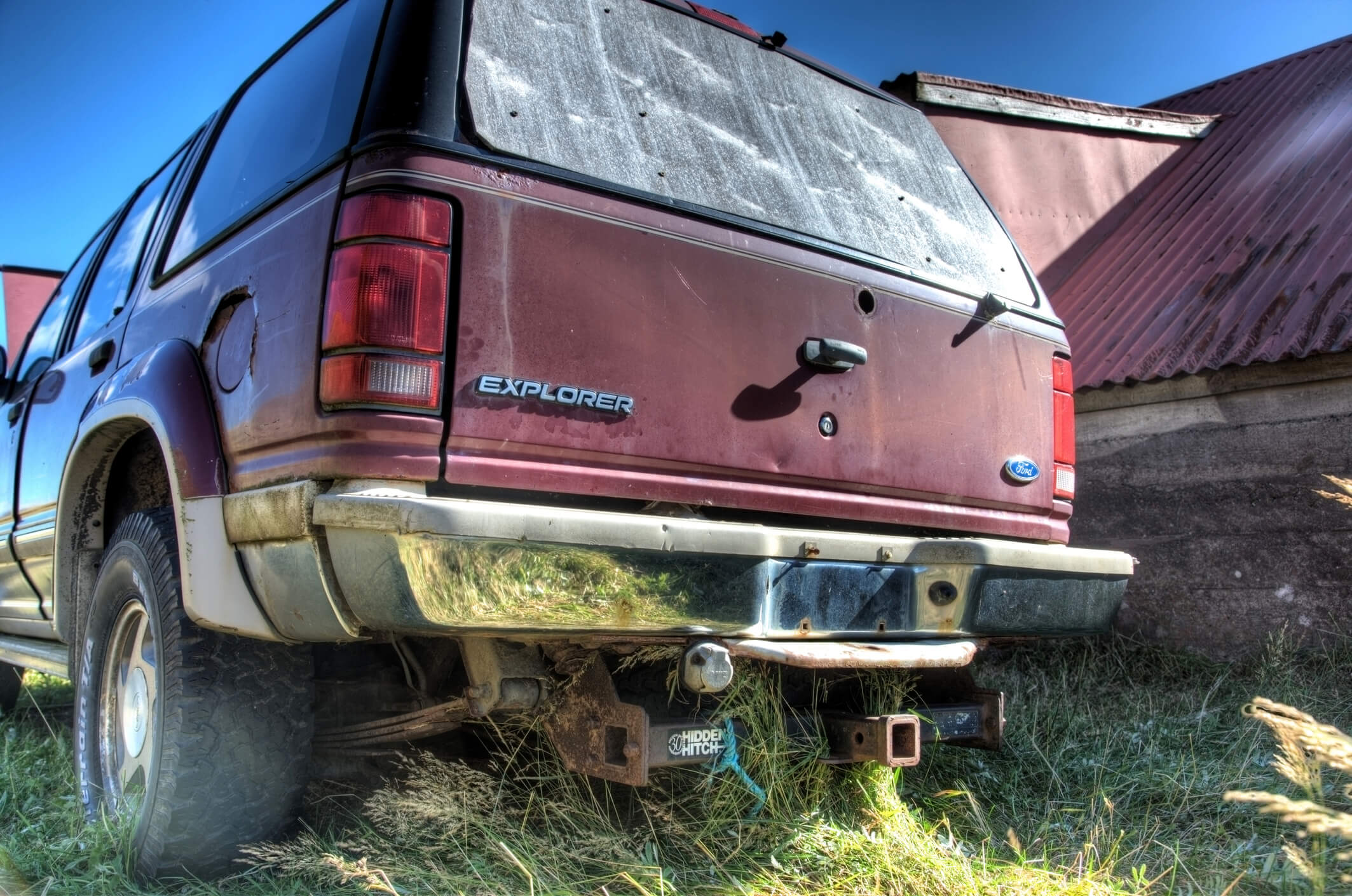
A rusted, dirty Ford Explorer SUV is parked in a field with a corrugated metal building behind it.

By Michael H. Rosenstein, Esq.

The court’s seemingly straightforward holding in Silvio v. Ford Motor Co., 109 Cal. App. 4th 1205, 1207 (2003) (“Silvio”) is regularly misconstrued, misquoted, and misinterpreted to stand for things that it simply does not say.  Automakers like to stretch, squeeze, and shoehorn Silvio into an interpretation that serves their defense of a Song-Beverly Act claim.  However, Silvio itself simply does not say what the automakers oftentimes claim that it does.  What is more, when read in light of other key lemon law precedents, it is very clear that Silvio does not support the automakers’ erroneous interpretation.  

The facts of Silvio begin with Frank and Charlotte Silvio purchase of a Ford Explorer from Board Ford on November 17, 1998. (Silvio  at 1207). On November 29, 1998, as Frank Silvio drove into his garage, the Explorer suddenly and rapidly accelerated, although Silvio did nothing to cause the acceleration. (Id.) On December 28, after picking the Explorer up from the body shop, Frank Silvio drove the Explorer to Board Ford. (Id.) Board Ford representatives drove the Explorer and conducted tests, and told Silvio that they could not find anything wrong with the vehicle, but that the problem was caused by thick after-market floor mats he had put in the Explorer. (Id.)  There was another episode of sudden acceleration on July 24, 2000. (Id.) The Silvios’ son contacted Board Ford, told them about the incident, and said that appellants wanted Ford to buy back the Explorer and did not want it fixed. (Id.) Ford refused to buy the Explorer from the Silvios. The evidence was thus that Ford Motor Company was given only one opportunity to repair the Explorer.  

The holding in Silvio is very straightforward: the court of appeal found that that the Silvios could not exercise their rights under the Song-Beverly Act because Ford had been given only one opportunity to fix the vehicle.  As the court explained, “[t]he statute requires the manufacturer to afford the specified remedies of restitution or replacement if that manufacturer is unable to repair the vehicle “after a reasonable number of attempts.” “Attempts” is plural. The statute does not require the manufacturer to make restitution or replace a vehicle if it has had only one opportunity to repair that vehicle.” (Silvio at 1208, emphasis added).  Thus, Silvio’s holding is clear: manufacturers must be allowed at least two or more attempts to conform a vehicle to warranty.  

Automakers oftentimes attempt to bend Silvio to argue that they should be allowed more than one attempt to fix each defect in a vehicle, more than one attempt for each part that breaks in a vehicle, or that defects which are fixed on the first attempt do not even count towards a Song-Beverly Claim.  All three of these arguments are bogus and stem from a misreading of Silvio.  

The unique facts of Silvio apply to the rare case where a consumer’s vehicle, like the Silvios’ vehicle, is presented only one time for repair.  The language of the statute, Civil Code 1793.2(d)(2) is clear: “If the manufacturer or its representative in this state is unable to service or repair a new motor vehicle… to conform to the applicable express warranties after a reasonable number of attempts…” the manufacturer must replace/repurchase the vehicle. It must be noted that, in the statute, the language “after a reasonable number of repair attempts” applies to the “vehicle” as a whole – not to each defect in the vehicle.  No California case has ever held otherwise.  In fact, each occasion that an opportunity for repairs is provided counts as an attempt, even if no repairs are actually undertaken. (Oregel v. American Isuzu Motors, Inc. (2001) 90 Cal.App.4th 1094, 1103-1104.)

FCA (manufacturer of Fiat, Chrysler, Dodge, Ram, Jeep, Maserati, and other vehicles) recently attempted to misinterpret Silvio in the matter Atienza v. FCA US LLC, No. 3:17-CV-00977-WHO, 2018 WL 6460431, at *3 (N.D. Cal. Dec. 10, 2018).  FCA argued that the plaintiff’s case should be thrown out because he, “never presented the same defect to an authorized repair facility more than once as required under the ‘attempts’ language of the statute, and all issues that he did present were resolved.”  The United States District Court, Northern District of California, however, correctly read Silvio and shot FCA’s arguments down, stating: “Silvio is not instructive for two reasons. First, I cannot agree with the court’s statutory interpretation analysis. Given the structure of the phrase ‘a reasonable number of X,’ the object of the preposition ‘of’ must necessarily be plural. One person might think one is a reasonable number of children, while another might find five a reasonable number. Children may be plural, but one is not. Second, as [plaintiff] points out, the plaintiffs in Silvio brought in the entire vehicle for repair only once. See Oppo. 8. Accordingly, the court did not hold that a plaintiff must present the same defect more than once.  FCA has produced evidence that could lead a jury to conclude that it did not have a reasonable number of opportunities to cure the defects or that it successfully repaired all defects.”  (Id.).  

In 1964, the band The Animals famously sang, “Please Don’t Let Me Be Misunderstood!”  55-years later, Silvio should not be misunderstood either.  Silvio does not say that manufacturers get two chances to fix each defect or each part on a car.  Allowing such leeway would be ridiculous because modern cars have some 30,000 parts. Silvio also doesn’t say that defects, which are fixed on the first try, do not count towards a Song-Beverly claim.  What Silvio does hold is that vehicle manufacturers are allowed more than one attempt to fix the vehicle as a whole.  Nothing more.  

Our State’s lemon laws are nuanced and manufacturers go out of their way to bend them in their favor.  If you need help with a tricky lemon law claim, call the experts at CCA: (833) LEMON-FIRM.

A bald man with glasses and a suit jacket is looking under the open hood of a car.

While we’ve all had mechanical and electronic devices with defects that have driven us crazy, defects that affect our cars are often the most intrusive. It is never good news to hear that your car will have to be “in the shop” again for an extended period. When you receive such news about a new, newly purchased or leased car (still under warranty), you will probably begin wondering if your car is a lemon. If you suspect it is, the first thing you should do is get in touch with a lemon law attorney with a reputation for knowledge and integrity. The last thing you need when you are already feeling taken advantage of is a lemon law attorney you can’t trust.

California Lemon Laws

Though state lemon laws vary a bit state to state, in California, typically for a vehicle to be considered a lemon:

  1. Your car must have a “substantial defect or defects;”
  2. The defect or defects must be covered by the original manufacturer’s warranty;
  3. That defect must affect the use, value or safety of the vehicle
  4. Your car must have gone through a reasonable number of repair attempts without success

Failures of the major vehicle systems – brakes, engine, transmissions, vehicle computers, etc. – typically qualify as substantial impairments.  If, on the other hand, your upholstery has a worn spot or your glove box doesn’t open unless you bang it—these defects typically do not qualify as “substantial.” 

Stuck with a Lemon? The Right Lemon Law Attorney Will Help You Make Lemonade

Don’t waste any more time feeling frustrated and helpless. With a capable lemon law attorney at your side, you will have the best chance of receiving the refund or replacement vehicle you deserve.