
A black car driving fast on a curved road at sunset.

Modern technology has helped make cars safer, but new cars are also more complicated than ever. Cars are now essentially computers on wheels, and digital technologies can malfunction just as easily as any mechanical part. In turn, these new technologies can substantially impact claims under the California lemon law.

The California lemon law lawyers at The Lemon Firm believe that every driver in the state deserves to know their legal rights if they buy a car that does not work as promised. This blog provides essential information on how new innovations in car technology can affect a lemon law claim and how we can safeguard your rights in these situations.

The Basics of the California “Lemon Law”

Before digging into how new technologies in cars can impact a lemon law claim, it helps to understand your rights under the California lemon law. The formal name for this law is the Song-Beverly Consumer Warranty Act, and it guarantees certain rights to anyone who buys consumer goods in California, including cars.

The Song-Beverly Act says that every consumer good sold in California has an implied warranty of merchantability and an implied warranty of fitness. In plain English, that means every car is assumed to work as promised, is suitable for its intended purpose, and is of the same quality as similar products. Therefore, if your car needs repeated visits to a repair shop to address a crucial defect and it doesn’t get fixed, you can demand a refund or a new vehicle from the manufacturer.

However, it’s worth noting that the California Lemon law does not apply in all situations. For one thing, it only applies to defects covered under the manufacturer’s factory warranty, meaning it does not apply to aftermarket parts or modifications. Second, the lemon law is primarily meant to help owners of new vehicles, typically those less than 18 months old and with fewer than 18,000 miles driven (though there are exceptions). Finally, you must give the manufacturer a “reasonable” number of attempts to address the defect, though the exact number of attempts depends on the defect.

Modern Car Technologies That Lead to Lemon Law Claims

As automakers have implemented more digital technologies in newer vehicles, these new systems can malfunction, placing drivers in danger or rendering a car unusable. Some modern car technologies that may lead to a lemon law claim include:

  • Infotainment Systems: These are the heart of a car’s entertainment and navigation services. When they malfunction, they can turn a smooth ride into a frustrating puzzle of missed turns and silent commutes.
  • Advanced Driver-Assistance Systems (ADAS): These systems, like autopilot or lane-keeping assist, aim to make driving safer. However, when they falter, they can compromise safety, leading to potential lemon law claims.
  • Electric Vehicle (EV) Batteries: The powerhouse of electric cars, these batteries are crucial for performance. A faulty battery not only reduces range but can also sideline an EV entirely.
  • Transmission Systems in Hybrid Vehicles: These sophisticated systems blend electric and traditional power. When they break, they can cause erratic behavior and reduced efficiency, making them prime subjects for lemon law claims.
  • Keyless Start Systems: Although these were designed for convenience, a malfunction in a keyless start system can prevent the car from starting, turning convenience into a significant inconvenience.

How Technology in New Cars Affects California Lemon Law Claims

In some ways, the type of defect doesn’t matter at all in a lemon law claim. All that matters is whether the car has repeatedly malfunctioned in spite of efforts to repair it and whether the manufacturer’s factory warranty applies. That said, it can be harder to prove a lemon law claim involving new technology in cars because there are fewer past examples of successful claims to refer to. Furthermore, because digital technology in cars often interacts with basic mechanical systems, it can be difficult to prove the underlying cause.

The smartest move you can make in these cases is to hire an experienced California lemon law attorney. They can investigate your car’s issue, gather evidence to support your claim and represent you in legal proceedings against the car’s manufacturer. Call The Lemon Firm today or complete our contact form for a free consultation.

The word

In the fast-paced world of automotive manufacturing, ensuring the safety and reliability of vehicles is paramount. Despite rigorous testing and quality control, defects and safety issues can emerge, and the need for automotive recalls is apparent. 

In this article, we will explore the intricacies of automotive recalls, shedding light on what they are, why they occur, and how consumers can navigate this crucial aspect of the automotive industry. We also uncover the top 10 recalls by vehicle brands throughout 2023.

Firstly, What Is a Recall?

An automotive recall is an official action taken by a vehicle manufacturer, or the National Highway Traffic Safety Administration (NHTSA), to address a defect or safety issue that has been identified in one or more models. These defects can range from faulty components and design flaws to manufacturing errors. The objective of a recall is to rectify the issue promptly, ensuring the safety of vehicle occupants and preventing potential accidents. 

Why Are Recalls Important?

There are several reasons why a recall is important to both you as a consumer and the manufacturer, they are:

1. Protecting Consumers:

Recalls act as a safety net against potentially hazardous incidents as a result of a defective vehicle. It helps protect consumer safety and well-being.

2. Injury and Fatality Protection:

If safety standards are not met, a recall is a result of either a failed manufacturing process or a part continuously failing out in the field, where many owners have reported issues. A recall is designed to protect people from injuries, illness, and death if they were to continue to use the defective vehicle.

3. Trust and Responsibility:

Automotive manufacturers need to be trusted and relied upon when it comes to consumer safety. It also helps boost confidence between consumers and government regulatory agencies that oversee the automotive industry.

4. Legal Liability Mitigation:

A recall is aimed at reducing automakers’ and consumers’ legal liability and cases against them. It also provides ethical compliance to business practices.

5. Correcting Faults:

The primary goal of automotive recalls is to prevent injuries, illnesses, or fatalities among consumers. Simultaneously, recalls aim to correct the underlying problems that led to the recall in the first place, ensuring a safer driving experience for all. This could also save the manufacturer from more, expensive repairs later down the line if they have to repair every delivered vehicle.

Let’s uncover the most recalls by brand throughout 2023, the results may surprise you.

2023 Recalls In The US From Popular Auto Brands

Below is a chart showing the main Automakers across the US and their associated recall in 2023. According to NHTSA statistics https://datahub.transportation.gov/stories/s/NHTSA-Recalls-by-Manufacturer/38mw-dp8u/ (This list is not extensive, the full list is found on their website).

As we approach the end of 2023, a comprehensive look at the NHTSA statistics reveals a dynamic landscape of automotive recalls across major manufacturers in the United States. Let’s uncover the top 10 brands that have announced the most recalls.

Top 10 Recalls in 2023 According to NHTSA.

1. Ford Motor Company (Recalls: 54)

Ford leads the pack with the highest number of recalls in 2023. These recalls span various models, and as one of the most popular automakers in America, it is understood why there are so many. After all, Ford needs to uphold the trust of millions of vehicle owners.

2. Chrysler (FCA US, LLC) (Recalls: 45)

Following closely, another US car brand, Chrysler demonstrates a damaging threat to their reputation and profits. With 45 recalls, Chrysler’s commitment to consumer safety is clear for everyone to see. The recalls encompass a range of models, emphasizing the company’s dedication to rectifying issues and ensuring the reliability of their vehicles.

3. BMW of North America, LLC (Recalls: 29)

BMW takes the third spot, underlining the prestigious German brand’s commitment to safety and quality, whilst admitting that not every automaker is perfect. With 29 recalls, BMW addresses various concerns, showcasing a proactive stance in maintaining their vehicles’ performance and safeguarding their drivers.

4. Mercedes-Benz USA, LLC (Recalls: 26)

Mercedes-Benz maintains a strong presence in the list of recalls, despite being such a large brand with an excellent reputation, they want to take care of their customers and reduce safety risks. With 26 recalls, the company prioritizes rectifying issues and ensuring that their vehicles adhere to the highest safety standards.

5. Nissan North America, Inc. (Recalls: 22)

Nissan secures a position in the top five recalls, as an affordable brand suitable for all types of consumers, Nissan indicates a proactive approach to consumer safety. With 22 recalls, the company demonstrates a commitment to addressing potential issues promptly and maintaining the reliability of its vehicles.

6. Honda (American Honda Motor Co.) (Recalls: 17)

Honda maintains a strong presence in automotive recalls, the popular automaker has addressed minor and major safety concerns. With 17 recalls, Honda showcases a proactive approach to rectifying potential issues and ensuring the continued trust of their vast consumer base.

7. Kia America, Inc. (Recalls: 20)

Kia secures a spot among the top recalls, despite being known as one of the most reliable brands out there. With 20 recalls, Kia demonstrates a proactive stance in addressing concerns and upholding the performance and reliability of their vehicles.

8. Subaru of America, Inc. (Recalls: 13)

Subaru makes its mark in the top recalls list. With 13 recalls, Subaru is a lesser-known brand in America but still takes a proactive approach to rectifying issues promptly. They do not want any lawsuit against them as a result of a defective part.

9. Tesla, Inc. (Recalls: 13)

As a prominent player in the electric vehicle market, Tesla is not exempt from recalls. With 13 recalls, Tesla has a much different approach to recalls, as they can often solve minor glitches and vehicle settings over the air. Over-the-air updates prevent Tesla owners from visiting the dealership and save the company a lot of money by avoiding physical repairs. 

10. Porsche Cars North America, Inc. (Recalls: 11)

Surprisingly, Porsche rounds out the top 10 recalls, showcasing that not every brand is perfect, and for the safety and performance of their luxury vehicles, 11 recalls were initiated. Porsche actively addresses concerns, ensuring that their vehicles meet the rigorous standards expected by their discerning customer base.

Recalls In 2023

While these top manufacturers lead the recall counts, it’s essential to recognize that recalls are a shared responsibility across the automotive industry. Other prominent manufacturers such as Jaguar Land Rover and Volkswagen have also been actively addressing safety concerns, collectively contributing to a safer driving experience for consumers.

The 2023 automotive recall data reflects that even the most prominent brands have safety concerns and manufacturing issues from themselves or their suppliers. It also shows a proactive and collective effort by major manufacturers to prioritize consumer safety, despite leaving owners frustrated. 

The high number of recalls underscores the industry’s commitment to maintaining public trust and ensuring that safety standards are met as closely as possible, otherwise, owners will want to take back control.

If you or your loved ones are the registered owner of a vehicle plagued by recalls, call 833-LemonFirm today to speak with a case analyst who can help you sort or fact from fiction concerning your consumer rights.

Mercedes-Benz logo with the brand name.

Imagine you have an important meeting, but your new Mercedes won’t start. This is exactly what happened to a customer when she parked her Mercedes-Benz CLS without any lights or electronics on. After a few hours, the 48-volt battery was drained completely.

If you are a Mercedes owner and experiencing 48-volt battery problems, you’re not alone. Many owners are facing other issues related to the battery such as the car being unable to start, shutting off while in motion.

Mercedes owners are claiming that 48-volt batteries in their vehicles are dying unexpectedly and leaving them without their cars for weeks.

Affected Mercedes Vehicles

It is found that 48-volt battery problems occur mostly with the E-, CLS- and GLE-/GLS-class vehicles model year 2019 and onward for the sedans, and model year 2020 for the SUVs. The investigation isn’t limited to only these models and inspecting all cars with the 48-volt mild hybrid system.

Symptoms of Mercedes 48V Battery Problems

There are many reports of different issues related to 48-volt battery systems. However, the most common issues are no starts and vehicles shutting off in motion.  Drivers say that these problems occur randomly even with a brand-new car with less than 50 miles.

Additionally, vehicles that are towed to the dealership often take several days to diagnose the problem. Some owners are stuck with paying for diagnostics, software updates and even battery replacements.

Mercedes 48 Volt Battery Malfunction: What Are Mercedes Drivers Saying?

“My 2021 E450 All-Terrain wagon is on its third 48-volt battery. The first battery failed after 15 days and 196 miles. The second battery died after 30 days and 535 miles. The third and current battery is still alive and well after 5 months a little over 3,000 miles, but my confidence still hasn’t been restored.” — LONGROOF45, MBWORLD.ORG

“My car is a 2021 E 450 All Terrain with approximately 6,700 miles, delivery taken at the end of March 2021. It would not start 5 days ago while parked in the garage and had to be flatbed towed to the dealer…As of today, my car has been with dealer for 5 days, and other than confirming it would not start due to a faulty 48v battery, I have received zero support from the dealer. I am without a car (no loaners are ‘available’) and they have given me no information on how long my car will be out of service. I can’t even get them to confirm that Mercedes has authorized a battery replacement.” — JAYST, MBWORLD.ORG

“I had my battery replaced last week. My car only has 152 miles on it. I sincerely hope that the new battery does not fail. I’ve also got some creaks on the door panels. My faith in MB is way down. The fact that MB Denver has done 60 of these replacements already tells me MB has a known issue on their hands and is doing nothing. That’s a real shame in my book.”

WIEN0305, MBWORLD.ORG

“I received my pre-ordered 2021 E 450 Cabriole on December 28, 2020. After one week, the car without warning wouldn’t start and had to be towed into Ft. Lauderdale. Since then the car has been in the shop. We have been waiting for the delivery of a battery and no one seems to be able to locate a battery. This 48v battery located in the trunk is unique to the 2021 model year, and apparently no spare parts are available especially critical parts needed for the operation of the vehicle. Very sad to pay $80,000 for a new car, and not be able to use the vehicle for an unknown period of time.” — P. MOORE, BENZFORUM.COM

“I just had my brand new GLS have the same 48V battery malfunction for the second time since I bought it. It doesn’t even have 10k miles on it yet. The first time I got the 48V battery malfunction light on and within 2 minutes the car would no longer accelerate. Mercedes said it was a manufacturing problem to do with the grounding of the 48V battery in the engine…that there was ‘paint’ in the way and it wasn’t ground properly. They had my car for 5 days, sanded our the pain and reattached it all then said it was fine. Less than 3 months and a few thousand miles later I had the exact same problem. Warning light comes on and then multiple other warning lights after…This time I knew to pull over right away before the engine failed. I had to have it towed in both times. The car is BRAND new….and frankly, feels super unsafe now that this has happened twice.” — TINK, MBWORLD.ORG

How Could a Class Action Lawsuit Help?

A class-action lawsuit could give Mercedes owners a chance to recover rental and repair costs, as well as compensation for being unable to use their vehicles. It can also force automaker to extend warranties and find a permanent fix for the issue. If you are experiencing problems with your 48V battery, we want to know.

Final Thoughts

If you are an automobile owner and have manufacturing issues, you can contact us regarding your involvement in this or any potential class-action lawsuit. Serious vehicle problems require serious legal representation, especially when you are bringing a claim against a major automaker. At the Lemon Firm, our experienced Attorneys have been able to successfully recover compensation for our clients who were sold a vehicle with manufacturer defects, and we can do the same for you. Call (833) Lemon-Firm to speak with a Lemon law expert today.

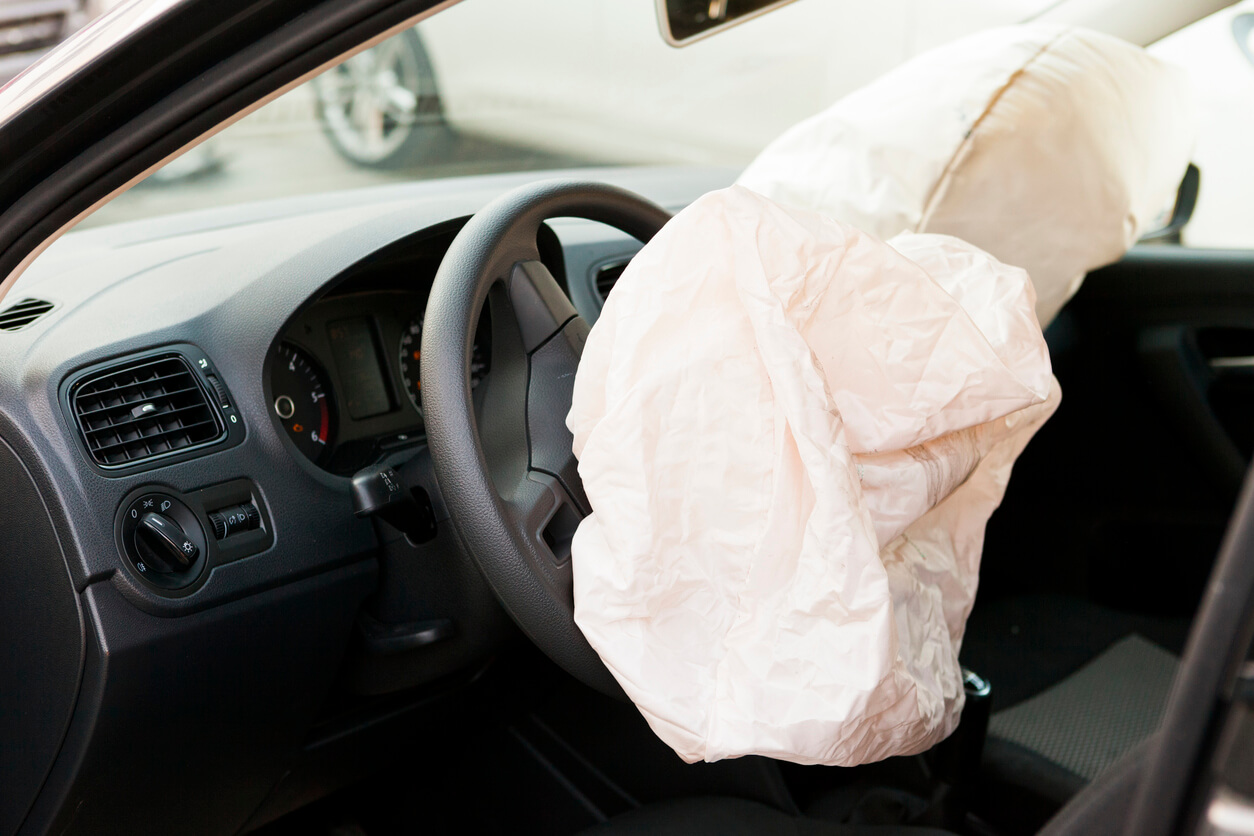
The image shows a deployed airbag inside a car after an impact.
By: Nicole Halavi

Numerous complaints regarding defective Continental airbags have been filed against automakers such as Honda, Mercedes, Dodge, Mazda, and Fiat Chrysler. Continental AG, also commonly referred to as Continental, is a German automotive parts manufacturer specializing in brake systems, tires, powertrain, automotive safety, and other parts for the automotive industry. In light of these issues, drivers of the affected models may be eligible for compensation. The most common claims include breach of warranty and negligence.

If you are an owner of a vehicle equipped with defective Continental airbags, CCA is here to help. We invite you to call our experts today for a free consultation: (833) LEMON-FIRM.

What Are the Safety Issues in the Continental Airbags that Led to a Class Action Lawsuit?

Vehicles equipped with Continental airbags have been exhibiting complications for more than a decade. As per several reports, the manufacturer has been aware of these issues as early as 2008.

Continental airbag control units manufactured between 2006 and 2010 are known to have a faulty power supply component that is susceptible to corrosion due to moisture that can eventually lead to premature unit failure. This is a defect that can have significant impacts on your vehicle’s overall performance and safety systems. The faulty component can damage the seatbelt pre-tensioners and airbags, which might not function in the event of a crash. Also, the defect can lead to unnecessary deployment of the airbags. Both cases can put the driver and other passengers in a dangerous, and potentially life-threatening, situation.

Some of the most popular brands that used the defective Continental airbag control unit include Mercedes-Benz, Fiat Chrysler, and Honda. Mentioned below is a list of models that have been recalled due to the airbag defect:

        • 2008-10 Honda Accord
        • 2009 Dodge Journey
        • 2008-09 Dodge Grand Caravan
        • 2008-09 Chrysler Town and Country
        • 2009 Volkswagen Routan
        • 2008-09 Mercedes-Benz C Class
        • 2008-09 Mercedes-Benz GLK Class
        • 2009-2010 Mazda Mazda6
        • 2016 BMW 7-series (740Li, 750Li, 750 Lxi)

While the list above covers some of the most commonly used vehicles, it only addresses around 600,000 out of the five million vehicles equipped with the defective airbag control unit.

What Can I Do If I am an Owner of a Vehicle Mentioned in the List Above, or Have a Model Equipped with Defective Continental Airbags?

If you own a vehicle mentioned in the affected models list above or own another model equipped with defective Continental airbags, you may be eligible for compensation. The attorneys at CCA are knowledgeable about the issues caused by Continental airbags and will work to get you the compensation you deserve from the auto manufacturers.

If you are experiencing any safety issues with your vehicle, do not hesitate to contact our experts for a free consultation at (833) LEMON-FIRM.

African American woman checking the hood of her car.

The California Supreme Court recently expanded the remedies available to lemon law plaintiffs in its long-awaited decision in the matter, Kirzhner v. Mercedes-Benz USA, LLC (Cal., July 27, 2020, No. S246444) 2020 WL 4280966, at *22020 (“Kirzhner”).   In Kirzhner, the Supreme Court tackled the question as to whether, in a lemon law case, an automobile manufacturer should be required to reimburse registration renewal and nonoperation fees? Specifically, should the reimbursement be recoverable as collateral charges or as incidental damages? The California Supreme Court answered, essentially, yes – such damages are recoverable when they flow from the automakers’ violation of the Song-Beverly Act (the “Act”).

The fact in Kirzhner were fairly straightforward: Plaintiff Allen Kirzhner leased a new vehicle from Mercedes in 2012. He alleged that during the warranty period, his vehicle exhibited numerous defects that ultimately led to a malfunctioning command system, navigation system, and key fob. These defects also caused the steering column adjustment mechanism and power seats to be inoperative, the coolant level warning light to illuminate, and smoke to emanate from the cigarette lighter. As is the story in most lemon law cases, Mercedes was still unable to repair the defects after a reasonable number of repair attempts.

After filing suit, Mr. Kirzhner ultimately accepted a settlement offer made by Mercedes pursuant to Code of Civil Procedure §998 about six months into litigation. Instead of specifying a monetary amount in the settlement offer, Mercedes offered Mr. Kirzhner a replacement vehicle or restitution in exchange for the vehicle. Mr. Kirzhner opted for restitution and was awarded upwards of $47,000 by the trial court. However, while this sum included the initial registration fee that Mr. Kirzhner paid upon entering into the lease, it did not include the registration renewal fees and nonoperation fees totaling $680 paid in 2013 and 2014. Mr. Kirzhner took exception to the Court’s failure to award these fees because, he claimed, they arose from Mercedes’ failure to comply with the Act.  Mr. Kirzhner appealed and the Court of Appeal affirmed the trial court ruling that the only registration fee that could be considered “collateral” is one that is paid at the time the vehicle is purchased or leased.  Mr. Kirzhner appealed, again!

Our Supreme Court analyzed Civil Code §1790 of the Song-Beverly Consumer Warranty Act, commonly known as the “lemon law,” allows consumers with a “lemon” to choose one of two remedies: a replacement vehicle or restitution. More specifically, §1793.2 of the Act states that “the manufacturer shall make restitution in an amount equal to the actual price paid or payable by the buyer…including any collateral charges such as sales or use tax, license fees, registration fees, and other official fees, plus any incidental damages to which the buyer is entitled under §1794…”

In Kirzhner, the Court concluded that based on the plain language of §1794, subsequent registration renewal and nonoperation fees are not recoverable collateral charges because these charges are not collateral to the price paid for the vehicle. The Court reasoned that the initial registration fee is a recoverable collateral charge, like a sales or use tax, because it is a price paid as part of the total cost of the vehicle and in exchange for the vehicle. Contrastingly, a registration renewal fee or nonoperation fee is one that is paid to the DMV during the course of the lease or ownership, and so cannot be classified as a “collateral charge.”

While the fees were deemed unrecoverable as collateral charges, the Court held that they are recoverable as incidental damages if they were incurred as a result of the automakers’ failure to promptly provide a replacement vehicle or restitution once its obligation under §1793.2 arises. Subsection (d)(2) provides that a buyer may recover restitution “plus any incidental damages to which the buyer is entitled under §1794, including, but not limited to, reasonable repair, towing, and rental car costs actually incurred by the buyer.” Further, California Uniform Commercial Code §2715 defines “incidental damages” as including expenses “reasonably incurred in inspection, receipt, transportation and care and custody of goods rightfully rejected, any commercially reasonable charges, expenses or commissions in connection with effecting cover and any other reasonable expense incident to the delay or other breach.”

Therefore, the Supreme Court remanded the case for the trial Court to make a determination as to whether or not the additional registration fees were incurred as a result of Mercedes’ failure to promptly replace/repurchase the vehicle. 

While Kirzhner is seemingly over only $680, the decision has broad implications for California lemon law matters:

  • Kirzhner allows lemon law plaintiffs to pursue registration renewal fees beyond year-one of ownership, if they were incurred as a result of the automakers’ failure to repurchase/replace the vehicle.  In other words, if the automaker should have bought the car back, registration fees incurred after the vehicle should have been repurchased are now available. 
  • Other incidental damages – such as insurance premiums, maintenance charges, and other charges incurred for the care and custody of the vehicle are also, potentially, available now. 
  • Importantly, our Supreme Court confirmed that manufacturers possess an “affirmative duty” to voluntarily repurchase defective or unfixable vehicles, even without the consumer asking that they do so. 

If you have questions regarding your lemon law claim, we invite you to learn more about CCA and call our experts today for a free consultation: (833) LEMON-FIRM. 

Close-up of a modern car's interior, showing the gear shift and dashboard controls.

Automatic emergency braking (AEB) is one of the most talked-about safety features in modern vehicles. When it works properly, AEB can prevent rear-end crashes and reduce injury severity. But when it malfunctions, the system can create serious risks, from sudden stops in traffic to vehicles that refuse to move at all.

At The Lemon Firm, we often hear from California drivers about AEB issues. With new regulations requiring AEB on all light vehicles by 2029 and recent studies highlighting safety gaps, the conversation around defective systems is more urgent than ever.

What Is an Automatic Emergency Braking (AEB) System?

AEB uses cameras, radar, or a mix of sensors to detect potential collisions. If the system believes a crash is imminent, it automatically applies the brakes to either avoid the crash or reduce its severity.

While the technology has shown benefits in reducing rear-end collisions, it is not foolproof. Poor sensor placement, software glitches, or environmental conditions like glare and rain can trigger unnecessary braking or prevent braking when it’s needed most.

Recent Safety Studies and New Federal Rules

Recent studies have shown a rise in “phantom braking,” where vehicles suddenly stop even when no obstacle is present. These false activations not only frustrate drivers but also increase the risk of being rear-ended.

In 2024, U.S. regulators finalized a rule requiring all new light vehicles to include AEB by 2029. While many 2024–2025 models already feature AEB, the mandate means consumers should expect the technology in every new car going forward. Unfortunately, the rule doesn’t guarantee that automakers will get it right the first time, and lemon law claims are likely to rise as systems are rushed into production.

Signs Your AEB System May Be Defective

A faulty AEB system can cause:

  • Phantom braking – sudden, unnecessary stops in the middle of traffic.
  • Random stalling or slowing – especially at low speeds, in parking lots, or on slopes.
  • Failure to start or maintain operation – some vehicles shut down after ignition due to false collision warnings.
  • Unreliable detection – systems may miss actual obstacles, failing to brake when needed.

If you notice repeated issues like these, your AEB system may qualify as a defect under California’s lemon law.

Vehicles Reported with AEB Problems

Over the past few years, complaints and investigations have centered on several makes and models, including:

  • 2018 Volkswagen Atlas
  • 2017–2019 Nissan Rogue (including Hybrid and Sport trims)
  • 2017–2018 Honda CR-V
  • 2024 Tesla Model 3 (phantom braking complaints continue despite software updates)
  • 2025 Honda Accord (reports of sudden stops tied to sensor sensitivity)

This is not an exhaustive list. AEB issues have surfaced across many brands, including Toyota, Subaru, and Ford.

Automaker Responses and Investigations

Regulators and automakers have taken mixed steps:

  • Nissan issued a Technical Service Bulletin and a “Customer Service Initiative” after widespread Rogue complaints, but lawsuits continue alleging defective systems.
  • Volkswagen has faced hundreds of complaints about the Atlas but has limited recalls.
  • Tesla has issued multiple software updates, but phantom braking reports remain high, especially with Autopilot engaged.

The National Highway Traffic Safety Administration (NHTSA) has fielded thousands of AEB complaints and opened investigations into certain makes, though recalls have been limited.

Your Rights Under California Lemon Law

California lemon law protects you if your vehicle suffers from a substantial defect, like a malfunctioning AEB, that the manufacturer cannot fix after a reasonable number of repair attempts. Remedies may include:

  • A replacement vehicle
  • A refund of your purchase price, including taxes and fees
  • Payment of your attorney’s fees by the manufacturer

You don’t have to settle for unsafe, unreliable technology.

FAQ: Automatic Emergency Braking and Lemon Law

What is phantom braking?

Phantom braking happens when your AEB system applies the brakes even though there’s no obstacle ahead. 

Are all cars required to have AEB now?

Not yet. The federal rule requires all new light vehicles sold in the U.S. to include AEB starting in 2029, though many 2024–2025 models already have it.

Can I file a lemon law claim for a defective AEB system?

Yes. If your vehicle’s AEB continues to malfunction despite repeated repair attempts, you may qualify for relief under the California lemon law.

Talk to The Lemon Firm About Your AEB Issues

If your vehicle’s automatic emergency braking system is unreliable or unsafe, you have legal options. At The Lemon Firm, we help California drivers hold automakers accountable when safety technology fails. Contact us for a free consultation. We’ll review your case and explain how we can fight for the refund or replacement you deserve.

A close-up shot shows a person's hands signing a document with a pen, while another person's hand points to the paper.
By Brian T. Murray, Esq.

Consumers in California can file a lawsuit under the Lemon Law even if they no longer own the defective vehicle. 

In these volatile economic times, there is a growing pressure to keep up with our monthly expenses despite an uncertain financial future. For most of us, our car payment is one of our largest monthly expenses, second only to our housing costs.  And, for many of us in California, keeping your car is just as essential as keeping a roof over your head. 

If you are one of the thousands of Californians struggling to keep up with your car payments, just know that there is no requirement under the law that a consumer maintain ownership or control of a defective vehicle to claim your benefits under the Song-Beverly Consumer Warranty Act, better known as California’s Lemon Law. 

This means that if you are forced to sell your car, or your car is repossessed, you can still recover the amount you paid for the vehicle (and still owe for the vehicle) if the vehicle qualifies as a “Lemon.”  

In 2011, in Martinez v. KIA Motors America, Inc. (2011) 193 Cal.App.4th 187, the California Court of Appeal addressed the issue of whether a consumer must possess or own a vehicle in order to obtain damages under the Song-Beverly Act.  In July 2002, Juanita Martinez purchased a new 2002 KIA Sedona.  In the first year, Ms. Martinez noticed an odd burning smell. She complained about the smell to the KIA dealership at least 4 times in the first 3 years of ownership, but the dealer did nothing to address the problem. 

In 2005, at 38,162 miles, Ms. Martinez was driving the KIA Sedona when it started shaking and smoking from the engine.  Ms. Martinez smelled a strong acidic odor, which she believed to be battery acid. The vehicle was towed to two different KIA dealerships, both of which denied warranty coverage, blaming the “battery” problems on Ms. Martinez. 

Unable to pay for the repairs out-of-pocket, Ms. Martinez was forced to leave the vehicle at a dealership where it was later repossessed and sold to KIA of Glendale.  KIA of Glendale determined that the car’s alternator had been overcharging and causing damage to electrical components and repaired the vehicle’s alternator under KIA’s written warranty.

In 2011, Ms. Martinez sued KIA for breach of warranty under the Song-Beverly Act.  The Superior Court of Riverside County dismissed Ms. Martinez’s case because she no longer had possession of the vehicle.  Ms. Martinez appealed.

The Court of Appeal held that consumer does not need to possess or own a vehicle to avail himself of the remedies of the Song-Beverly Act.  The court held that to impose such a requirement is contrary to the purpose of the Act which is a remedial statute designed to protect consumers. 

Therefore, based on Martinez, you are not required to hold onto a defective vehicle in order to exercise your rights under the law.   If you need to sell your car because you can’t afford to make payments or if your car is repossessed because you stopped making payments you can still recover the amount you paid for the vehicle and the amount you still owe on the loan if your vehicle qualifies as a “Lemon.” 

If you would like to discuss whether your vehicle, or former vehicle, qualifies as a “Lemon” please contact us today for a free consultation with an expert lemon law attorney: (833) LEMON-FIRM [(833) 536-6634] or www.thelemonfirm.com

Man searching for cars online through private parties.

Buying a car today often looks very different from just a few years ago. Many drivers now purchase vehicles online or from private sellers rather than from traditional dealerships. While the process can be fast and convenient, it also raises an important question: do lemon law protections still apply? The answer depends on who sold the vehicle, whether it came with a valid warranty, and where the sale took place. Understanding these factors can help you determine if you’re protected if a car turns out to be a lemon.

Step One: Determine Whether There’s a Warranty

The first requirement for any lemon law claim is warranty coverage. California’s lemon law applies to vehicles covered by the manufacturer’s new-vehicle warranty, including many used or certified pre-owned vehicles still under that warranty. That means the defect must be one that the manufacturer was obligated to repair under the warranty’s terms.

If you purchased a used car “as-is” from a private party and no manufacturer warranty remains, the vehicle will likely fall outside lemon law protection. However, if the car still has time left on its factory warranty or if it was sold as a certified pre-owned vehicle backed by the manufacturer, you may still qualify.

Key points to consider:

  • Was the warranty active when the defect appeared?
  • Did the manufacturer or authorized dealer have a fair number of chances to fix the problem?
  • Did the defect affect the car’s use, value, or safety?

If the answer to all three is yes, the warranty element is likely met.

Step Two: Identify Which Law May Apply

Once you confirm warranty coverage, the next question is which law governs your situation. California’s Song-Beverly Consumer Warranty Act generally covers new and certified pre-owned vehicles purchased from licensed retail dealers in California.

However, purchases made from private sellers or out-of-state retailers often fall outside the scope of Song-Beverly. In these situations, you may still have rights under the federal Magnuson-Moss Warranty Act, which protects consumers who bought vehicles with written warranties, regardless of where they were purchased.

In short:

  • Private-party sales: Limited coverage unless a manufacturer warranty still applies.
  • Out-of-state purchases: May qualify under federal warranty law.
  • Online dealer or broker sales: May qualify if the business is licensed in California and the vehicle carried a valid manufacturer or CPO warranty.

Step Three: Evaluate the Defect and Repair Attempts

Even with a valid warranty, the defect itself must meet specific legal standards. Under California’s lemon law, a vehicle qualifies as a lemon if:

  • The defect substantially impairs the vehicle’s use, value, or safety.
  • The issue occurred while the warranty was active.
  • The manufacturer or authorized dealer had a reasonable number of chances to repair the problem.
  • The vehicle spent at least 30 cumulative days in the shop for warranty repairs.

Documentation is key. Keep all repair orders, invoices, and written communication with the dealer or manufacturer. The more detailed your record, the stronger your case will be if you need to pursue a claim.

Step Four: Assess Your Purchase Type and Seller

Online and private-party sales can make it harder to prove lemon law eligibility, but not impossible. The key distinction is whether the seller qualifies as a “retailer” under California law.

For example:

  • A Carvana, CarMax, or Vroom purchase may qualify if the business is licensed in California and the car was sold with a manufacturer’s warranty.
  • A Craigslist or Facebook Marketplace transaction between individuals generally will not qualify because private sellers aren’t considered retailers under the statute.

Still, if the vehicle has an existing manufacturer’s warranty, you may have rights under federal warranty laws even when the state statute doesn’t apply.

Under California law, lemon law claims are typically brought against the vehicle manufacturer rather than the private seller, since private parties generally aren’t subject to the Song-Beverly Act.

Step Five: What to Do if You Think You Have a Lemon

If you believe your vehicle qualifies as a lemon, whether it was purchased from a private party, through an online platform, or from a traditional dealer, take these steps:

  1. Gather all documents related to the sale, warranty, and repairs.
  2. Write down the timeline of when the defect first appeared and each repair attempt.
  3. Avoid performing major repairs yourself, as this could void warranty coverage.
  4. Contact a lemon law attorney who can evaluate your eligibility under California and federal laws.

Many consumers assume private or online sales leave them unprotected, but that’s not always the case. The details of the warranty and the seller’s status can make all the difference. 

Get Answers Before Giving Up

Even if your vehicle was purchased online or from a private seller, you may still have options under California or federal lemon law protections. The process can be complex, but you don’t have to figure it out alone. We’ll review your purchase, warranty status, and repair history to determine if you qualify for a refund, replacement, or other remedy.

Call The Lemon Firm today for a free consultation and find out whether your vehicle meets the requirements for lemon law relief.

Two men shaking hands across a table while a woman smiles.

California lemon law arbitration is presented as a fast, low-cost way to resolve defective vehicle claims, but recent trends show that arbitration programs often favor the manufacturers who fund them. If you are dealing with ongoing defects, we can help you understand your rights and avoid common pitfalls that weaken consumer claims in arbitration. At The Lemon Firm, we represent California drivers facing these disputes and work to secure fair, accurate outcomes that arbitration alone often fails to deliver.

Why Choose The Lemon Firm

We assist California consumers who need clear guidance and a strong strategy. Clients choose us because:

  • We know how automakers use arbitration programs to limit consumer claims
  • We prepare each case to create leverage from the start
  • We handle communication, evidence review, and claim building
  • We focus on timely resolutions with fair compensation
  • We only get paid when we win for you

What Is Lemon Law Arbitration in California?

Arbitration is a private process where a neutral arbitrator reviews evidence and issues a decision instead of a judge. Many manufacturers use California’s certified arbitration programs, including BBB Auto Line, CAP-Motors, and the California Dispute Settlement Program. Because these programs are funded by automakers, consumers often question how neutral the process truly is.

Arbitration is available, but it is not required. You can always pursue your claim in court, where the rules are clearer and outcomes tend to be more favorable for vehicle owners. California’s updated lemon law process also includes mandatory mediation in many cases, but mediation is separate from arbitration and does not limit your ability to file a lawsuit.

Is Arbitration Mandatory for Lemon Law Claims?

No. Manufacturers often urge drivers to start with arbitration, but this recommendation typically reflects their advantage within these programs. Consumers who follow this path may enter a process that limits their ability to present evidence, question company representatives, or fully challenge the manufacturer’s position.

You do not lose any rights by declining arbitration, and many Californians achieve better results by filing a lawsuit instead.

Why Arbitration Often Favors Manufacturers

Consumer-rights groups and legal researchers have documented patterns showing that arbitration outcomes frequently lean toward automakers. Several factors explain this trend:

1. Manufacturer-funded programs create structural advantages

While arbitrators are intended to be neutral, the programs rely on automaker funding. This repeat-player relationship can influence how claims are evaluated.

2. Limited discovery weakens the consumer’s position

Arbitration does not offer the same tools available in court. Automakers control technical data, engineering records, and warranty analytics. Consumers typically have only service invoices. This imbalance affects how defects are interpreted.

3. Many consumers appear without legal guidance

Manufacturers participate with trained representatives who understand the process. Consumers often attend alone and may not know how to challenge incomplete repair records, misapplied warranty rules, or improper manufacturer narratives.

4. Arbitration decisions may be used later in court

Although arbitration results bind only the manufacturer, the outcome is usually admissible in a later lawsuit. If the result is unfavorable, the manufacturer may use it to undermine the consumer’s case.

Is Arbitration Faster or More Convenient?

Arbitration can be faster in some situations, but speed does not always lead to a better result. When arbitration ends unfavorably, consumers must start over in court, adding months to the process.

By working with a lemon law attorney from the start, you avoid unnecessary procedures and move directly toward an outcome that reflects the strength of your claim.

Does Arbitration Save Money?

Manufacturers promote arbitration as “free,” but most California lemon law clients do not pay legal fees when they file lawsuits. Under California’s Song-Beverly Consumer Warranty Act, manufacturers must cover attorney’s fees when the consumer prevails. This means legal representation typically costs you nothing.

The financial benefit of arbitration is far smaller than many consumers are led to believe.

What To Do If You Believe Your Vehicle Is a Lemon

If your vehicle continues to malfunction after multiple repair attempts, speak with a lemon law attorney before entering arbitration. We can evaluate whether arbitration would put your claim at risk, help you gather stronger records, and outline the best strategy based on your repair history.

We represent consumers throughout California and handle every step of the process so you are never left guessing about your next move.

Take the Next Step Toward a Fair Outcome

If you are being pushed toward arbitration or are unsure how to proceed, we can help. We will review your repair records, assess the strength of your claim, and explain the most effective way to pursue compensation. Contact The Lemon Firm today for a free consultation and let us help you protect your rights.

Frequently Asked Questions

Can arbitration ever be beneficial?

It can be helpful when the manufacturer has already acknowledged a defect, but these situations are uncommon. We can assess whether your claim fits this scenario.

Will I need to attend an in-person arbitration hearing?

Some programs allow virtual hearings. Requirements vary by program.

Can I still file a lawsuit after arbitration?

Yes. However, an unfavorable arbitration result may later be used as evidence, so legal guidance beforehand is important.

Man inside a Honda Accord, holding the steering wheel.

By Jim Martinez, PC

The Honda Accord has long been ubiquitous on California roadways. Generally held to be the premier model of one of the automotive industries more reliable manufacturers, the Accord is not without its issues – particularly electrical and engine issues in 2013-2018 models. 

Common issues within the 2013-2018 Honda Accords are related to the starter failing soon after the basic 3-year/36,000 warranty expires. The most widely reported issue with the starter manifest in intermittent “no-starts,” sometimes requiring the driver to repeatedly press the Start Engine button before the vehicle would start – if the vehicle started at all. Accord owners and lessors report a clicking noise or flickering dash lights during these no-start episodes. However, Honda authorized technicians (dealership technicians) are often unable to duplicate the no-start issues due to the defect’s unreliable nature, and as such often do not repair the issue. 

The consumer is charged for a replacement starter and the labor required to install it, costing the consumer close to $1,000 per repair if not covered under warranty or covered by the manufacturer. In other instances, the consumer may be charged for a repair diagnosis, even if the Honda trained technicians are unable to verify the consumer’s concern, in effect being charged over $100.00 and leaving in the same position as before. Still worse, even though Honda Motor America is aware of their starter issues, the problem is often misdiagnosed by dealership technicians or service advisors, who may recommend replacing the vehicle’s battery – again, often at a cost to the consumer if the vehicle is out of warranty.

Other Accord owners and lessees, particularly with the 2018 Honda Accord, have reported that the auto-braking feature engages for no apparent reason while the vehicle is in operation, sometimes for seconds at a time. 2018 Honda Accord owners have also reported excessive pulsation and shuddering in the brakes when applied at highway speeds. At the risk of stating the obvious, both of these issues pose serious safety risks for Accord drivers and their fellow motorists. Accord drivers must rely on other drivers’ quick reaction times in order to avoid collisions that the drivers themselves could not be blamed for.

Still, other issues owners and lessees of 2018 Honda Accords have reported include premature daytime light burnout and headlight failure. Repairing this problem is not as simple as merely changing a lightbulb. Rather, the repair often requires the replacement of the entire headlight unit, at a cost of over $1,000 to the consumer if the defect manifests when the vehicle is out of warranty. Moreover, drivers report subsequent headlight failures of the same headlight unit, or both, again sticking the consumer with high out-of-pocket costs, to say nothing of the inconvenience of presenting the vehicle to a Honda dealership and waiting for your vehicle to be suitable to drive once again. 

While the problems with the Honda Accord’s starter, braking, and headlight issues have since been extensively documented, the general public was unaware of the issues which plagued the vehicles at the time the vehicles were made available for sale – and for a significant period of time thereafter. However, on multiple Honda internet forums, as well as on the National Highway Traffic Safety Administration website, drivers of 2013-2018 Honda Accords lodged extensive complaints, cataloging their frustrations over these common defects. In an attempt to address customers’ widespread dissatisfaction with the starter defect, Honda issued Technical Service Bulletins (“TSB”) instructing Honda authorized technicians on myriad Band-Aid fixes that do not address the primary concern – including mere battery replacement – which in most cases only temporarily alleviate the concerns.  

Fortunately, California Consumer Attorneys can help. Our attorneys and automotive experts are well-versed in all manner of vehicle defects and would love to assist owners/lessees of 2013-2018 Honda Accords. Please call us today to learn about how CCA can assist you – at no charge: (833) LEMON-FIRM.