White Volkswagen Atlas Cross Sport SUV in lot

Volkswagen Group of America has issued a recall for more than 270,000 VW Atlas and Atlas Cross Sport vehicles due to concerns over defective front passenger airbags. This recall affects certain 2021-2024 VW Atlas models and 2020-2024 Atlas Cross Sport models across the United States.

History Behind The Recall

The recall centers around a potential fault in the passenger occupant detection system (PODS) of the affected vehicles. According to Volkswagen, this fault could lead to the front passenger airbag being deactivated while the seat is occupied. The National Highway Traffic Safety Administration (NHTSA) has warned that a deactivated airbag significantly increases the risk of injury during a crash. An acknowledgment letter from the NHTSA states, “A deactivated passenger airbag increases the risk of injury during a crash.”

Repair Plans and Notification

To address the issue, Volkswagen plans to replace the PODS sensor mat and wiring harness in the recalled vehicles at no cost to the owners. Recall notification letters are expected to be mailed to affected vehicle owners by August 16, 2024. Owners with additional questions about the recall can contact Volkswagen at 1-800-893-5298.

Previous and Related Recalls

This is not the first time Volkswagen has had to recall Atlas vehicles over airbag issues. In April 2023, Volkswagen recalled more than 140,000 Atlas and Atlas Cross Sport SUVs from the 2018-2021 model years. This recall was due to a defect in the passenger-side front airbag system, where the passenger occupant detection system could erroneously deactivate the airbag, even if a passenger was present. The issue was particularly concerning for vehicles with a passenger occupant detection system integrated into a heated front seat.

In those instances, the NHTSA advised owners not to allow anyone to ride in the front passenger seat until the defect was repaired. The problem was attributed to a fault in the wire connecting the detection system to the seat’s heating system. A new cable with a shield was introduced to production in October 2022, which has helped mitigate this issue in newer Atlas vehicles.

Ongoing Safety Measures

Volkswagen will notify dealers and affected vehicle owners about the current recall. Meanwhile, owners are encouraged to check the NHTSA recalls website to determine if their vehicle is part of this or any other recalls. The NHTSA report mentions that an instrument panel light and an audible warning should alert owners if the airbag deactivates due to this fault.

The safety of Volkswagen Atlas owners remains a priority as the company works to resolve these recurring airbag issues. Vehicle owners need to observe recall notices and take action to ensure their vehicles are safe to drive.

If you own a 2021-2024 VW Atlas or a 2020-2024 Atlas Cross Sport, be aware of this significant recall. Ensure your vehicle’s airbag system is checked and repaired as needed to maintain the highest safety standards. For more information, contact your local Volkswagen dealer or visit the NHTSA website.

How Vehicle Owners Can Take Back Control

If you struggle with an automaker who has failed to successfully address a safety recall, it is always better to have experts with you. With extensive experience and successful cases at hand, The Lemon Firm is your best bet. With the dedicated team members always at your disposal, the package becomes too good to be true. So, if your car is giving you a headache, don’t hesitate to reach out!

Call 833 Lemon Firm and speak with a case analyst today!

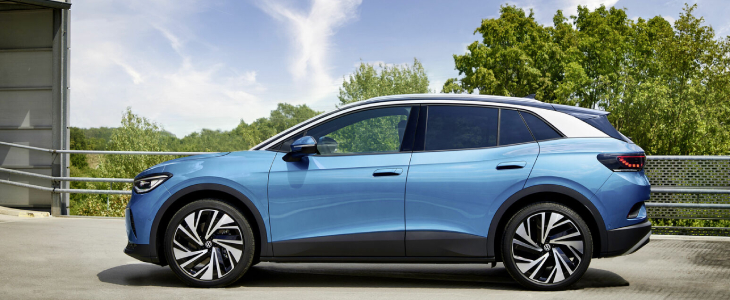
A light blue and white Volkswagen ID.4 is parked outdoors with trees and a cloudy sky in the background.

The German automaker is subject to recalls on their all-electric SUV after failing to display the rearview camera on the infotainment screen.

History of the Recall

A software glitch means that a host of Volkswagen ID.4 vehicles may have issues with rear-view camera footage being displayed on screen. This defective rear-view camera display could lead to an accident or injury if a driver fails to recognize the fault and reverses into an object, also affecting active safety systems.

The recall document then explains “If the rearview camera display is delayed or not displaying an image, there is an increased risk of crash or injury when the vehicle is backing up,”.

Owners are complaining of symptoms of flickering screens and sudden reboots of the center console screen. This also results in a reduction or loss of active safety systems whilst driving too, increasing the likelihood of a crash.

Which Models Are Affected?

Almost 80,000 Volkswagen ID.4 models are affected in the US and a further 8,000 in Canada, spanning from 2021-2023 model years. Any vehicle built between March 6, 2020, and Nov 2, 2023, is subject to the recall. After Nov 2, 2023, the ID.4 models have had significant software updates, as Volkswagen claims that the software before this failed to resolve “certain bug fixes and robustness improvements.”

So far, there have been 354 warranty claims of affected vehicles despite Volkswagen claiming that the glitch only affects 1% of the 88,004 vehicles.

What Owners Need to Do Next

Volkswagen has announced in the recall that a software update will be performed on affected vehicles. This will be provided free of charge, along with alleged promises of reimbursement to owners of the recalled vehicles.

Volkswagen explains in the recall document “The updated software will contain certain bug fixes and robustness improvements to prevent software resets and rearview camera/dashboard display issues,”.

Owners will be notified starting July 12, 2024, about a solution, which may involve taking the vehicle into a dealership for a free software upgrade to fix the issue.

The VW ID family has always had software and touchscreen glitches from the beginning and the company has been working tirelessly to fix the faults on an ad-hoc basis. This issue adds to the long line of faults that the new ID EV family has been subject to.

How Volkswagen Owners Can Take Back Control

While recalls have been announced, many continue to be unhappy with the solutions provided by automakers. These problems have the potential to escalate into further legal action – underlining the importance of protecting consumer rights.

If you struggle with vehicle troubles and feel cornered against big vehicle brands, remember it is always better to have experts with you. With extensive experience and successful cases at hand, The Lemon Firm is your best bet. With the dedicated team members always at your disposal, the package becomes too good to be true. So, if your car is giving you a headache, don’t hesitate to reach out! 

Call 833 Lemon Firm and speak with a case analyst today! 

A sleek, black modern car dramatically lit against a dark background.

As Audi and Volkswagen owners face the recent class action settlement concerning Automatic Emergency Braking (AEB) systems, a critical decision lies ahead: whether to stay within the class or opt-out. 

While a class action might initially seem appealing, a closer examination reveals potential pitfalls. 

So why might opting out of the class action be wise? The Lemon Law Firm could offer a more advantageous route for affected owners. Find out more in this article.

History Behind The Volkswagen-Audi Settlement

The class action settlement aims to address issues surrounding the AEB systems in certain Audi and VW models. These systems include features such as “Audi Braking Guard” and “Pre Sense,” which have been reportedly faulty and dangerous for drivers after unexpected activation.

Instances have been reported where the accelerator pedal cover becomes loose, potentially leading to unintended acceleration, even after the brake pedal is pressed. This defect can result in dangerous driving situations, highlighting the urgency for resolution and compensation for affected owners.

In response, Volkswagen Group of America (VWGoA) has agreed to extend warranties and provide partial reimbursements for select AEB-related repairs.

The affected models are shown below:

Volkswagen ModelsAudi Models
Certain 2019-2023 model year Arteon*Certain 2015-2020 and 2022-2023 Audi A3*
Certain 2018-2023 model year Atlas*Certain 2019-2023 Audi Q3*
Certain 2020-2023 Volkswagen Atlas Cross Sport*Certain 2013-2023 Audi A4*
Certain 2016-2017 Volkswagen CC*Certain 2013-2023 Audi A5*
Certain 2016-2021 Volkswagen Golf*Certain 2013-2023 Audi Q5*
Certain 2016-2019 and 2022-2023 Volkswagen Golf R*Certain 2012-2023 Audi A6*
Certain 2016-2019 Volkswagen Golf SportWagen*Certain 2012-2023 Audi A7*
Certain 2016-2023 Volkswagen GTI*Certain 2011-2023 Audi A8*
Certain 2016-2019 Volkswagen e-Golf*Certain 2017-2023 Audi Q7*
Certain 2021-2023 Volkswagen ID.4*Certain 2019-2023 Audi Q8*
Certain 2016-2023 Volkswagen Jetta*Certain 2019-2023 Audi e-tron*
Certain 2016-2022 Volkswagen Passat*Certain 2022-2023 Audi e-tron GT*
Certain 2022-2023 Volkswagen Taos*Certain 2022-2023 Audi Q4 e-tron*
Certain 2018-2023 Volkswagen Tiguan*
Certain 2015-2017 Volkswagen Touareg*

*Please note that not all models and model years mentioned are automatically covered by this Settlement (i.e., they may not qualify as a Settlement Class Vehicle). The determination of Settlement Class Vehicles is based on Vehicle Identification Numbers (VINs). To determine if your vehicle qualifies as a Settlement Class Vehicle, you can utilize the VIN Lookup Portal by entering your vehicle’s VIN as instructed.

Potential Drawbacks of Remaining in the Class:

Joining a class action lawsuit may seem like a simple solution to get compensation, but it comes with risks. You might give up your right to sue VWGoA individually by staying in the class. This means you can’t ask for a full refund or extra money for damages, which you could if you filed your own lawsuit.

Importance of Individual Legal Action:

Opting out of the class action means owners can make their own choices and take legal action that fits their specific situation. Instead of being limited by a class action, individuals can seek a full refund with the possibility of punitive damages.

Plus, individual lawsuits let owners make VWGoA responsible for any damage caused by the AEB system’s failures. This isn’t just about money; it shows car companies they need to care about keeping people safe and making reliable cars. By asking for better safety rules, owners can help make sure future cars are safer for everyone.

As Audi and VW owners navigate the complexities of the AEB class action settlement, the decision to opt out emerges as a strategic choice for those seeking comprehensive reimbursement. By choosing to pursue individual legal action with the support of The Lemon Law Firm, owners can assert their rights, maximize their compensation, and effect meaningful change within the automotive industry.

Important deadlines for taking action:

Settlement Class Members’ Legal Rights and Options
Deadline to postmark request for exclusion from the settlementJune 17, 2024
Deadline to file Objection to the SettlementJune 17, 2024
Deadline to file a claim for reimbursementJuly 15, 2024
Final Fairness HearingJuly 17, 2024, at 1:30 p.m.

How Owners Can Take Back Control

While the class action has been communicated to owners, many continue to be unhappy with the solutions provided by automakers. These problems have the potential to escalate into further legal action, just like this – underlining the importance of protecting consumer rights.

If you struggle with vehicle troubles and feel cornered against big vehicle brands, remember it is always better to have experts with you. 

With extensive experience and successful cases at hand, The Lemon Firm is your best bet. With the dedicated team members always at your disposal, the package becomes btoo good to be true. So, if your car is giving you a headache, don’t hesitate to reach out! 

Call 833 Lemon Firm and speak with a case analyst today! 

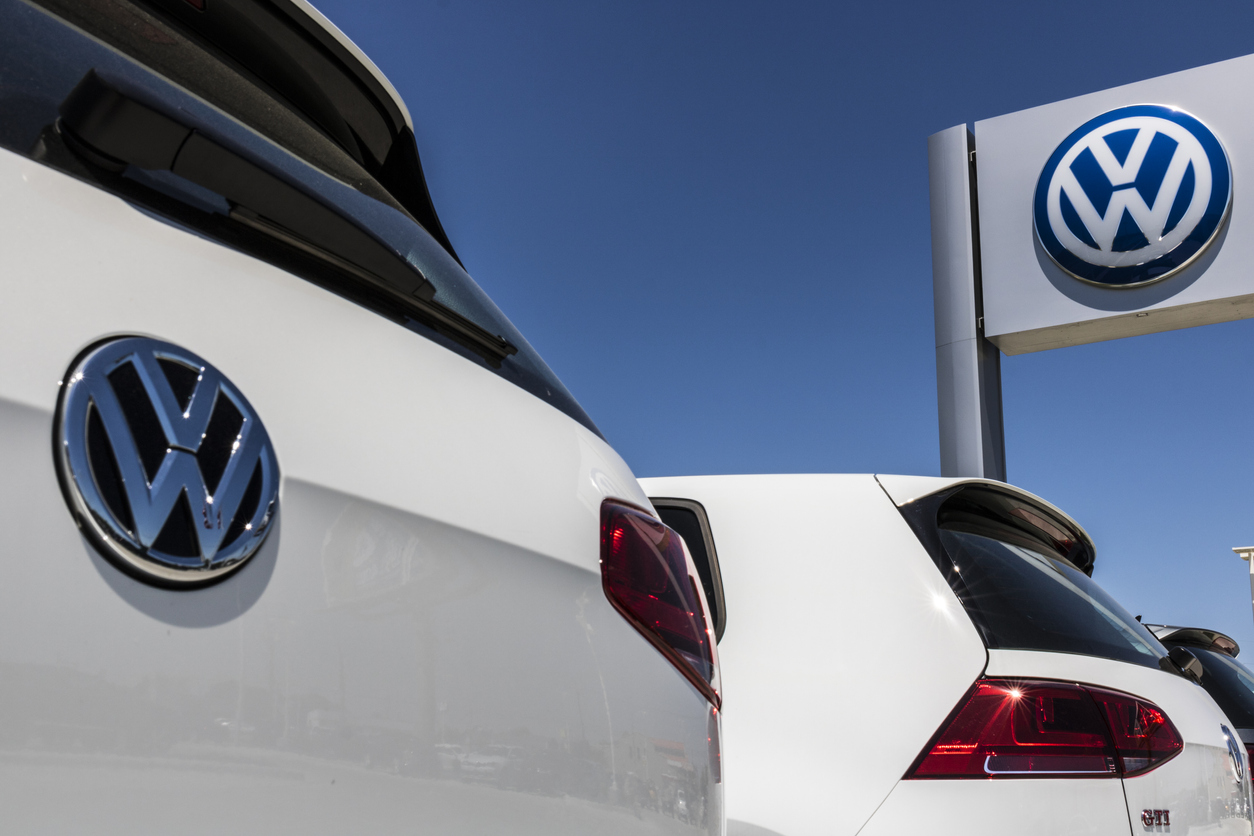
Volkswagen cars parked at dealership with VW logo sign

Volkswagen vehicles are at risk of premature wear on the brake pads on certain models and have updated warranty coverage for affected customers.

What Is The Risk of Brake Pad Wear?

Brake pads are an essential part of your car’s braking system. They are designed to squeeze against the brake rotors when you press the brake pedal and should slow your vehicle down in a controlled way. If the brake pad material is excessively worn, or if the brake pads were badly installed then it could affect braking ability and be unsafe to drive your vehicle.

What Volkswagen Has Claimed

A warranty letter was delivered to customers in 2023 stating that their rear brake pad warranty had been extended due to the possibility of premature wear. It affects certain 2020-2023 Model Year Jetta and 2022-2023 Model Year Taos vehicles, and the German automaker has claimed that the material may be excessively worn and/or a workmanship issue during installation.

Warranty Coverage Extension Information

Firstly, Volkswagen mentions that only the rear brake pads have extended warranty coverage. Previously the rear brake pads were only under warranty for a period of 1 year or 12,000 miles (whichever comes first), but now they have extended it to 2 years or 24,000 miles (whichever comes first) for the affected models.

Owners should keep their coverage extension letter and pass it on to any new owner if they sell the vehicle.

How Consumers Can Take Back Control

This latest announcement from Volkswagen affects a critical safety feature. Whilst warranty extensions have been announced for the affected vehicles, many owners continue to be unhappy with the solutions provided by automakers. These problems have the potential to escalate into further legal action, just like this – underlining the importance of protecting consumer rights.

If you struggle with vehicle troubles and feel cornered against big vehicle brands, remember it is always better to have experts with you. With extensive experience and successful cases at hand, The Lemon Firm is your best bet. With the dedicated team members always at your disposal, the package becomes too good to be true. So, if your car is giving you a headache, don’t hesitate to reach out! 

Call 833 Lemon Firm and speak with a case analyst today!

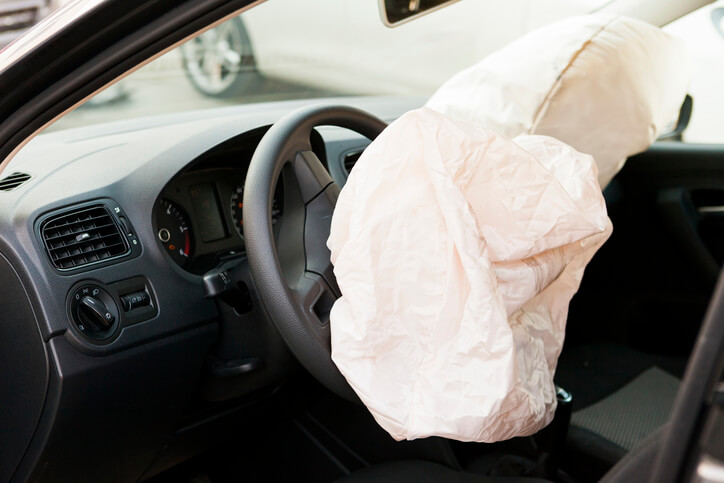
An exploded airbag is shown from the perspective of a car's dashboard and steering wheel, indicating a recent collision.

A Volkswagen Airbag Control Module recall has been ordered for more than 34,500 model year 2015-2016 Tiguan and CC vehicles. The recall concerns the airbag control module that oversees deploying the airbags. A defective capacitor is a device that sits in the module and powers the airbag – can cause inadvertent airbag deployments or cause the airbags to completely fail in crashes.

As per the report, A faulty capacitor in the airbag control module can cause the airbags to deactivate or in rare cases can lead to an increase in the risk of an injury due to the deployment or increase the risk of a crash without warning. 

The airbag control units were supplied by ZF-TRW, a company. VW says electrical overstress can occur and cause a deviation at the 5-volt power supply when the airbag control unit capacitor fails.

Affected Vehicles

  • 2015 Volkswagen Tiguan compact SUVs
  • 2016 Volkswagen (VW) Tiguan compact SUVs
  • 2015 VW CC cars
  • 2016 VW CC cars

VW Air Bag Airbag Control Module May Malfunction

NHTSA states that in the affected VW vehicles, the Airbag Control Module “may have a defective power supply capacitor that can result in airbag deactivation or inadvertent deployment of the airbags.” 

The repair

Volkswagen dealers will update the affected vehicles with new software that will monitor an increase in the Equivalent Series Resistance (ESR). If the software detects a problem within a 10-year extended warranty period, Volkswagen will replace the module for free. The update has been available since November 13, 2019.

Airbag Control Module Limited Warranty Extension

Volkswagen is extending warranty coverage for the Airbag Control Module in certain 2015-2016 model year Tiguan and CC vehicles for a time of 10 years, unlimited mileage from the vehicle’s original in-service date.

This warranty extension is fully transferable to subsequent owners. If the faulty capacitor issue be present within the time limit of the extended warranty, the VW dealership will replace the airbag control module at no cost to you. 

If you have previously paid for repairs relating to the faulty airbag control module, you can apply for the reimbursement. 

Have Questions? Talk With Us Now

If you are an automobile owner and have manufacturing issues, you can contact us regarding your involvement in this or any potential class-action lawsuit. Serious vehicle problems require serious legal representation, especially when you are bringing a claim against a major automaker. 

At the Lemon Firm, our experienced Attorneys have been able to successfully recover compensation for our clients who were sold a vehicle with manufacturer defects, and we can do the same for you. Call (833) Lemon-Firm to speak with a Lemon law expert today.

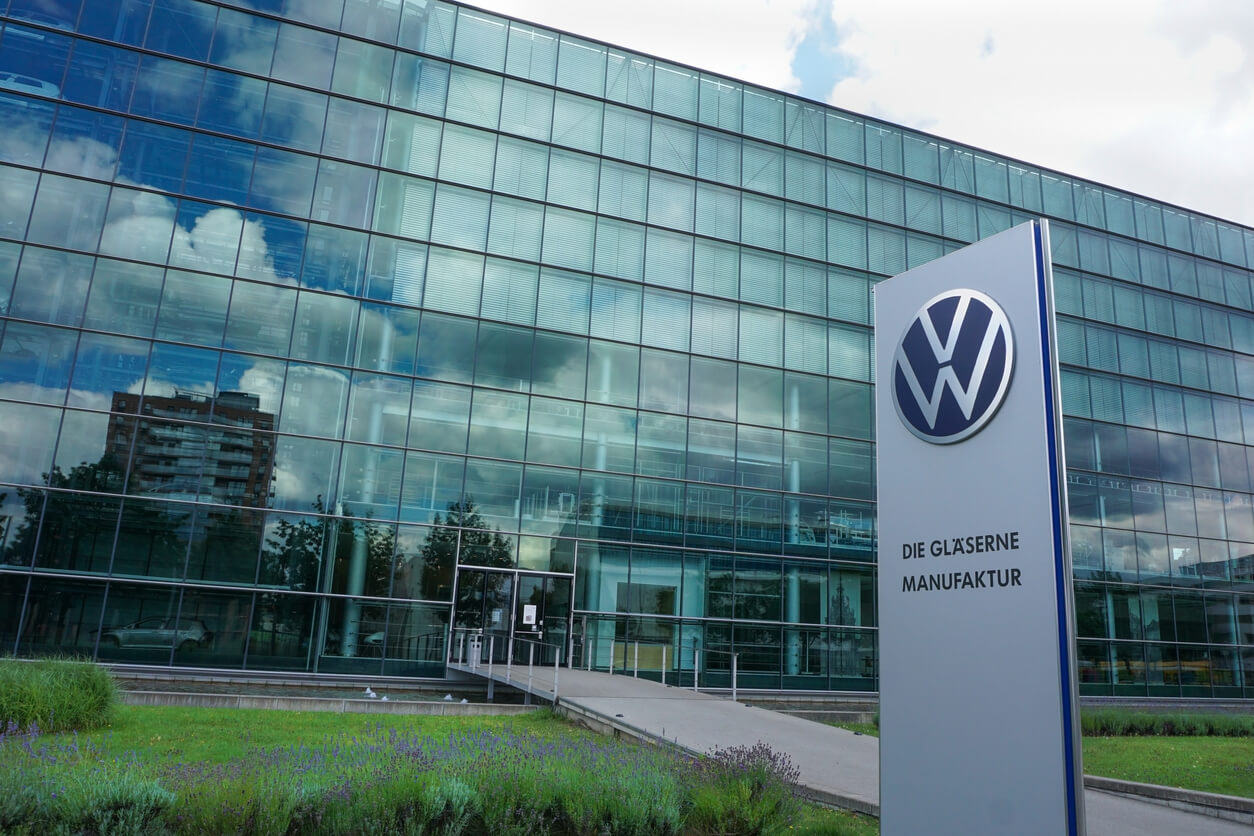
Volkswagen’s Die Gläserne Manufaktur factory building with glass exterior.

Volkswagen vehicle drain valves clog and leak water which damages the air filters and engines.

The Volkswagen Touareg class action lawsuit has been reached to a settlement over drain valves that clog and cause water to damage the air filters and engines.

The VW class-action lawsuit includes:

 “All persons and entities that purchased or leased any model year 2015-2017 Volkswagen Touareg vehicle imported and distributed by Volkswagen Group of America, Inc. in the United States and Puerto Rico.”

The two Touareg owners who filed the lawsuit allege 2015-2017 Volkswagen Touareg drain valves aren’t draining water properly from the engine compartments. This water was collecting in the airbox bottoms damaging the air filters and in some cases leaking into engines.

This can also apparently cause sudden engine failure which allegedly requires that VW repair or replace the engines under the terms of the warranties.

According to the vehicle owners, the drain valve problems can cause damage to the “[c]ylinder block[s] and all internal parts” and their “cylinder head[s] and all internal parts.”

However, Volkswagen agreed to settle this class action lawsuit, and the company denies the existence of any defect with the vehicles or the drain valves.

The lawsuit argues Volkswagen should offer a comprehensive program to repair or replace the drain valves and/or engines in all Class Vehicles, and/or buy back all Class Vehicles, and to fully reimburse and make whole all Class and Subclass members for all costs and economic losses.”

VW Touareg Class Action Lawsuit Settlement Terms

Settlement isn’t finalized until the judge grants final approval, however, the settlement doesn’t include buybacks, engine replacement, or full reimbursements but the drain valves can be removed if the vehicle owner wants it.

According to the settlement, Company will make a service section for affected Touareg owners to have the drain valves removed by dealerships. Additionally, a dealer will install a new filter if the filter is wet or shows any sign of water damage.

VW Touareg owners will have a year from the class action notice date or the first date the service action becomes available, whichever is later.

VW Touareg Drain Valve Partial Reimbursement Program

The class action lawsuit settlement provides a partial reimbursement program for customers who spent money expenses for repairs of water damage to the “air intake system, air filter, engine, turbocharger, or intercooler of a Settlement Class Vehicle that was caused by a clogged Drain Valve.”

A customer may be eligible for reimbursement of 75% of the expenses paid for repairs related to the drain valves.

However, the partial reimbursement program has limitations.

The settlement says that partial reimbursement is limited to expenses that have not already been “reimbursed by Defendants, an authorized Volkswagen dealer, an insurer, providers of extended warranties, or any other third-party entity who paid for all or some of the expenses.”

If damaged engine repairs were performed by a non-Volkswagen dealership, the customer will only receive 75% reimbursement up to a maximum of $9,909.

“Thus, for example, if the amount of the repair invoice exceeds $9,909, the Settlement Class Member shall be entitled to receive a reimbursement of 75% of $9,909.” — VW Touareg lawsuit settlement

Also, Volkswagen won’t be responsible for repairs performed by a non-VW dealership, and there won’t be a reimbursement for “damages resulting from abuse, alteration or modification, a collision or crash, vandalism, and/or other extraneous causes.”

VW Touareg customers will be required to submit authentic forms and proof of repairs and expenses.

The Touareg owners who filed the lawsuit will receive $5,000 each, and the attorneys representing them are expected to receive $775,000.

The VW Touareg class-action lawsuit was filed in the U.S. District Court for the District of New Jersey: Crandell, et al., v. Volkswagen Group of America, Inc, et al.

The plaintiffs are represented by Bursor & Fisher.

Final Thoughts

If you are an automobile owner and having manufacturing issues, you can contact us for a class-action lawsuit. Serious car problems require serious legal representation, especially when you are bringing a claim against a major automaker.  

At the Lemon Firm, our experienced attorneys have been able to successfully recover compensation for our clients who were sold a vehicle that did not perform as intended and we can do the same for you. Contact us for a free consultation today if you have experienced problems like those experienced by the Volkswagen class action above or any other types of design or manufacturing defects with your vehicle.  Our experienced attorneys can be reached by calling (833) 536-6634.  The first consultation is free and we can take your case on a contingency fee, meaning that you will not pay a cent unless our experienced attorneys recover money for you.  Call us today!

A low-angle view of a modern Volkswagen dealership building with a large logo on the corner and a flag flying in the foreground.
By Nicole Halavi

In January 2021, it was announced that automaker Volkswagen paid almost $35 billion for equipping diesel vehicles with illegal emissions defeat devices. Interestingly, this amount is negligible compared to what the automaker would face if even one of two court rulings stand.

An appeals court ruling granted two countries the right to seek an exorbitant damages award for updates made to diesel vehicles after they were sold. The suit was originally filed and dismissed in 2018. However, it was appealed to the U.S. Court of Appeals for the Ninth Circuit, which ruled against VW and its supplier, Robert Bosch.

The automaker is in a vulnerable position because the appeals court ruling will ultimately lead to lawsuits being filed in every country in the country, and the automaker says this “will severely compromise the EPA’s ability to regulate auto emissions.” The Ninth Circuit even admitted that the ruling may result in “staggering liability to Volkswagen.”

VW is also involved in a case currently before the Ohio Supreme Court. There, the automaker is facing claims that could potentially exceed $350 million per day or more than $127 billion per year for several years. The case was originally filed based on allegedly deceptive updates and recalls of 2009-2015 diesel vehicles that were illegally marketed and sold to 14,000 Ohio residents. In response, the automaker had argued that the state of Ohio cannot regulate automakers as that job belongs to the federal government. This case was also originally dismissed but has been revived by the Ohio Tenth District Court of Appeals.

What Can I Do if I’m Driving a VW Diesel?

If you are driving a VW diesel model that is exhibiting any of the issues discussed above concerning the emissions, California’s lemon laws are here to protect you and prevent any further complications. The attorneys at CCA are very knowledgeable about the issues associated with the emissions in VW diesel vehicles and will work with you to fight back against the automaker.

Please do not hesitate to call CCA today for a free consultation: (833) LEMON-FIRM. We’ll get you the compensation you deserve – and at no cost to you!

A person's hand is on a car steering wheel with a Volkswagen logo.
By Nicole Halavi

Volkswagen has just issued a second recall concerning the Atlas steering knuckle, very shortly after the initial recall was issued in November 2020. The recall includes more than 10,300 SUVs at risk of losing control if the steering knuckles break.

Following the initial recall, VW discovered a certain batch of parts that may have been affected by the defective parts that caused the first recall. In October 2020, the supplier of the steering knuckles contacted VW about 2 parts that failed when the strut mounts were tightened. While an investigation revealed that the parts were built according to specification, engineers were unable to duplicate the failures.

The automaker investigated the consequences of driving with the steering knuckles and determined the faulty parts came from a batch called JD253. At this point, VW issued a relatively small recall of Atlas SUVs built with the JD253 steering knuckles.

Following this initial investigation, a subsequent investigation revealed an additional steering knuckle failure from a batch called JD254. This finding led the automaker to believe the faulty parts were mixed into 2 production batches.

As such, this second recall will include 2021 Atlas and 2020-2021 Atlas Cross Sport vehicles and is expected to begin on March 26, 2021. The automaker has apparently agreed to replace either one or both steering knuckles.

What Can I Do if I’m Driving an Atlas with a Faulty Steering Knuckle(s)?

If you are driving a VW that is exhibiting any of the issues discussed above concerning the faulty steering knuckles, California’s lemon laws are here to protect you and prevent any further complications. The attorneys at CCA are very knowledgeable about the issues associated with faulty steering knuckles and will work with you to fight back against the automaker.

Please do not hesitate to call CCA today for a free consultation: (833) LEMON-FIRM. We’ll get you the compensation you deserve – and at no cost to you!

A view from behind two white Volkswagen Golf GTI cars shows the VW logo and a large sign with the VW logo on a sunny day.

By: Nicole Halavi

Volkswagen, also commonly known as VW, is a German automotive brand founded in 1937 and headquartered in Wolfsburg, Germany. Despite its reputable position in the auto market, the brand has attracted numerous consumer complaints that have resulted in class-action lawsuits. For example, a recent class-action lawsuit filed against Volkswagen alleges that several models have exhibited defects in the automatic emergency braking (AEB) system (sometimes called a “front assist” system).  Notably, VW is one of many automakers that is reported to suffer issues with its AEB systems. 

If your Volkswagen vehicle has exhibited AEB issues or other serious warranty defects, CCA is here to help.

We invite you to call our experts today for a free consultation: (833) LEMON-FIRM.

What is an Automatic Braking System?

Automatic braking is a safety technology that automatically activates the vehicle’s brake system, to some degree, when necessary. Systems vary from pre-charging brakes to slowing the vehicle to lessen the damage. Some advanced systems completely take over and stop the vehicle before a collision occurs.  The idea is that – if a driver isn’t paying attention and about to crash, in an emergency, the vehicle’s AEB system will automatically take over and apply the brakes. 

What is the Automatic Emergency Braking Issue in the Volkswagen Vehicles that led to a Class Action Lawsuit?

According to the Volkswagen class-action lawsuit, the AEB system in various models is defected and causes sudden and abrupt activation. The lawsuit alleges that all 2015-2019 models equipped with the Front Assist Features could be equipped with this defective braking system. 

However, this mechanism seems to have a negative impact and, in fact, in certain cases actually increases the chances of a potentially dangerous accident. The plaintiffs claim the AEB is defective due to software coding problems that result in unexpected and uncalled for emergency braking.

A user of the Volkswagen Golf 2018 describes the problem as follows: “The ‘front assist’ system on a 2018 VW Golf R is prone to making unsafe abrupt stops in traffic. If a leading car makes an abrupt stop, the front assist system applies instant heavy braking even when the driver is already bringing the car to a smooth stop at a safe distance. This double-braking results in unexpected skidding and risks a rear-end collision with following cars. The manual override to front assist is pressing hard on the gas pedal. This action can’t be performed when the driver is already bringing the car to a stop.”

Here is a partial list of Volkswagen Vehicles that, according to the class-action lawsuit, experience the Front Assist issue detailed above:

  • 2015 Premium Touareg SUV models
  • 2015 – 2019 Jetta
  • 2015 – 2019 Beetle
  • 2015 – 2019 CC
  • 2015 – 2019 e-Golf
  • 2015 – 2019 Golf
  • 2015 – 2019 Golf R
  • 2015 – 2019 Golf GTI
  • 2015 – 2019 Golf SportWagen

The lawsuit also states that VW has been actively concealing the issue and refuses to cover any repairs because the emergency braking system is working as intended.

What Can I Do if My Volkswagen Model is Exhibiting Issues Resulting from a Defective Front Assist System?

If you are an owner of any of the models mentioned in the list above or have been exhibiting any repeat issues with you AEB, CCA’s attorneys are here to help. Our attorneys are knowledgeable about the problems concerning VW vehicles and are prepared to get you the compensation that you deserve.

Please do not hesitate to contact our experts today for a free consultation at: (833) LEMON-FIRM.

A driver's hand is on the steering wheel of a Volkswagen, with a blurred view of the road and a side mirror showing the reflection of the landscape.

By: Michael H. Rosenstein, Esq.

Volkswagen is a German automotive brand founded in 1937 and headquartered in Wolfsburg, Germany. The brand became increasingly popular with consumers worldwide and is now one of the world’s leading automobile manufacturers. VW’s TSI engine is a high-performance engine known for its low fuel consumption, which also makes it one of the brand’s most popular engines. Despite its popularity, the engine has been the source of many complaints from VW drivers as a result of vehicle stalls. This has ultimately led to a class-action lawsuit against VW which alleges that VW engine defects have caused vehicle stalling in the Volkswagen GTI, Golf, Passat, Jetta, and Tiguan models.

If your Volkswagen vehicle has exhibited any serious engine issues or presents unrepaired engine defects, such as engine stalling, CCA is here to help. We invite you to call our experts today for a free consultation: (833) LEMON-FIRM.

What is the Volkswagen Stalling Defect?

The class-action lawsuit filed against the Volkswagen engine alleges that defected 2.0L TSI engines cause a stall in the following 2018 and 2019 VW models: Volkswagen GTI, Golf, Passat, Jetta, and Tiguan models. Owners of these models have filed multiple complaints that claim that the defective engine created problems such as excessive oil consumption, stalling, and clicking/tapping sounds.

Simply put, an engine stall means the engine has died or has stopped properly functioning. This can be dangerous as an engine stalling unexpectedly while driving may lead to a serious accident. A user explained these issues: “Car randomly shuts and stalls. I’ve had the car for 6 days, and it’s done it four times. Three when stopped or going 5mph or less on the highway of ramps. Once when going about 20mph in traffic. The car is a manual, and at all times the clutch was fully depressed.”

A user of the 2019 VW Jetta expressed his disappointment with VW’s service team: “VW has told me there is nothing wrong with the vehicle, despite its obvious overconsumption of oil. I have had to fill the oil tank twice now, in 6 months. Bone dry, twice… Terrible service. Not helpful, and very condescending.”

Ultimately, Volkswagen customers filed the class-action lawsuit against the automobile manufacturer. In addition to the stalling issue, the plaintiffs also claim that VW will not take any responsibility for the engine defects, leaving customers financially burdened by the cost of having these problems addressed. One plaintiff also claims that the engine problem persisted even after spending nearly $2,000 on repairs.   The lawsuit also refers to a petition that was submitted to the government requesting an investigation following 157 engine complaints regarding the engine stalling defect. NHTSA has not yet released any additional information regarding the acceptance or denial of the petition to investigate the Volkswagen vehicles. 

What Can I Do if My Volkswagen Model is Subject to Engine issues?

If you have experienced any of the engine defects discussed above or have been trying to contact the automaker regarding the issue without any luck, CAA is here to help. CCA’s attorneys are experienced in assisting VW customers throughout the State with their vehicle’s engine issues. Feel free to reach out to us for a quick and free consultation regarding your vehicle: (833) LEMON-FIRM.